
Synopsis
This detailed article looks at how fire pumps are the most important part of reliable fire protection systems. It talks about the differences between diesel and electric fire pump installations, goes over NFPA 20 design criteria, talks about performance and maintenance issues, and helps facility managers pick the best pump system for their site. This article makes Rotaflow Fire & Utility look like a reliable specialist in designing, installing, and maintaining fire pumps for businesses, industries, and municipalities in Canada.
Introduction
The fire pump is the most important part of a fire prevention system since it makes sure that there is always enough water. Fire pumps make sure that there is enough water pressure when automated sprinklers or hydrants go off in an emergency. This is true whether the pumps are in a high-rise structure, an industrial complex or a petrochemical plant.
Property owners and engineers need to know the difference between diesel and electric fire pumps and how each fits into a full fire protection design. This is important for safety, following the law, and making sure the system lasts a long time.
Role of Fire Pump
When the water supply (from a municipal main, storage tank, or reservoir) can’t provide enough pressure on its own, a fire pump is an important part of a fire suppression system that increases the pressure. When the pressure in the system goes below a certain level, like when the sprinkler heads open during a fire, the pump usually turns on by itself.
NFPA 20: Standard for the Installation of Stationary Pumps for Fire Protection is a set of rules that tells you how to design, install, and test fire pumps.
Some common types of fire pumps are:
- Horizontal split-case pumps are the most common and easy to fix.
- Vertical turbine pumps are great for wells or tanks where the water sources are below ground.
- End suction and in-line pumps are employed when there isn’t much space.
- An electric motor or a diesel engine powers these pumps.
Each has its own benefits, depending on the needs and conditions of the project.
A Detailed Comparison of Diesel and Electric Fire Pumps
1. Source of power and dependability
Pumps for Electric Fire
Electric motors get their power from the building’s electrical supply or a separate emergency generator. They are noted for being easy to clean, needing little maintenance, and starting up right away when a fire signal goes out.
But because they need electricity, they are vulnerable during power outages, which is a big deal in important places or distant areas.
Fire Pumps for Diesel
Diesel engines don’t need the electrical grid to work, therefore they keep working even when the power goes out. These pumps have fuel tanks, batteries, and controllers that make sure they start up automatically and keep running in an emergency.
They need more care (such as managing gasoline, changing oil, and fixing exhaust systems), but they are often required by law in places where safety is very important, like airports or oil and gas installations.
2. Space and Installation Needs
Electric fire pumps are smaller, quieter, and easier to put in existing mechanical rooms. They don’t need much exhaust ventilation and don’t need to store fuel on site.
On the other hand, diesel fire pumps need more room for the engine, fuel tank, ventilation, and exhaust pipe. According to NFPA 20, the pump room must be built such that air may circulate freely and the temperature can be controlled.
Rotaflow’s fire protection engineers design and build pump rooms that meet all of NFPA 20, NFPA 25, and Canadian building requirements. This makes sure that they work well and are safe.
3. Maintenance and operational performance
Electric pumps don’t need much maintenance other than routine electrical inspections and performance tests.
Diesel pumps need regular maintenance to keep them reliable. This includes checking the fuel, coolant, oil, and battery.
According to NFPA 25: Standard for the Inspection, Testing, and Maintenance of Water-Based Fire Protection Systems, both types need to have flow tests done once a year, churn tests done once a week, and inspections done from time to time.
Rotaflow’s licensed inspectors and Red Seal specialists do these jobs all around Edmonton, Calgary, and Fort McMurray to make sure that every fire pump is always in top shape.
4. Cost Comparison
| Factors | Electric Fire Pump | Diesel Fire Pump |
| Initial Cost | Lower | Higher |
| Operation Cost | Lower | Moderate (fuel) |
| Maintenance | Minimal | Frequent servicing |
| Power Outage Reliability | Needs backup generator | Fully independent |
| Installation Space | Compact | Larger, ventilated room |
Electric pumps are usually cheaper for places that have reliable grid power and backup generators. Diesel pumps are a safer investment, nevertheless, in rural places, industrial zones, or important infrastructure.
Requirements for NFPA 20 Design and Installation
NFPA 20 says how to build and install both diesel and electric fire pumps. Some of the most important things it says are:
- The pump’s capacity is measured in gallons per minute (GPM) based on how much the system needs.
- Pressure rating: high enough to suit the needs of sprinklers and hydrants.
- Design of the pump room: easy to get to, well-ventilated, and safe from flooding.
- Controller and transfer switch for starting, monitoring, and shutting down automatically.
- Testing and certification: The authority having jurisdiction (AHJ) must watch each pump go through a performance acceptance test.
Rotaflow makes sure that every installation is completely documented, tested, and compliant. They give owners a full commissioning report and system certification.
Fire Pump System components
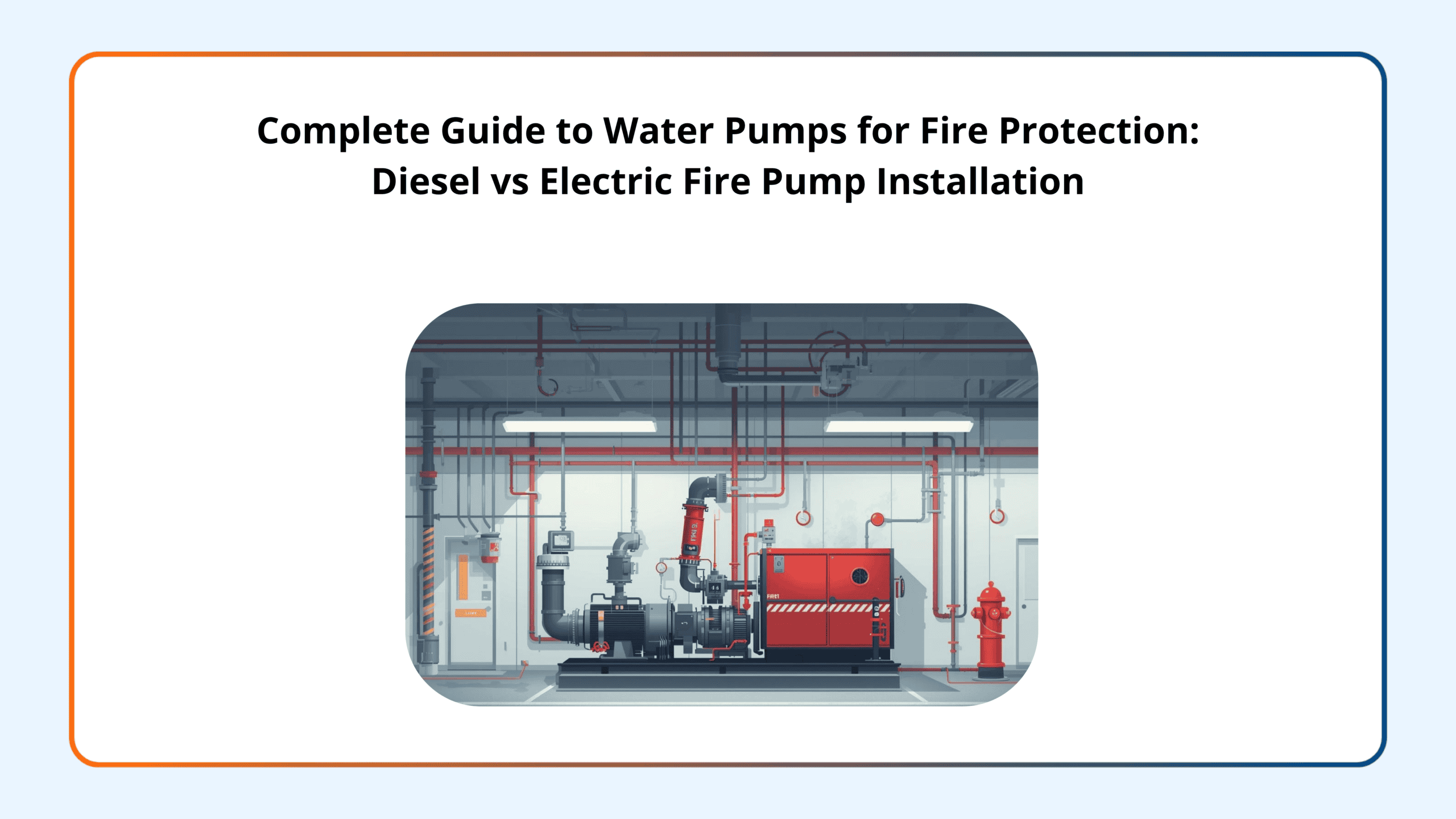
A full fire pump assembly usually has:
- Pump and driver (diesel engine or electric motor)
- Automatic transfer switch and controller
- The jockey pump keeps the system’s pressure steady between testing and alerts.
- Lines that sense pressure
- Flow meters, gauges, and test headers
- Check valves and relief valves
- Storage for fuel and exhaust systems (for diesel)
Rotaflow puts these parts together in modular fire pump skids or custom-engineered pump rooms. This makes it easier for businesses and factories to install and maintain them.
Applications Across Industries
| Industry | Preferred Pumo Type | Reason |
| High-rise buildings | Electric | Compact, low noise, easy integration |
| Industrial plants | Diesel | Operates during power failure |
| Oil & gas facilities | Diesel | Complies with hazardous zone safety |
| Hospitals & Data centers | Dual (Electric + Diesel) | Redundancy for mission-critical systems |
| Remote or rural infrastructure | Diesel | No dependence on grid power |
Rotaflow engineers come up with solutions that balance cost, reliability, and compliance by looking at risk, the environment, and operational requirements.
Testing, upkeep, and certification
Regular testing is very important for keeping fire pumps working. These are the regulations set out in NFPA 25:
- Weekly churn test to make sure that the automatic start and pressure control work.
- A yearly flow test to make sure the pump can handle the pressure and flow it is rated for.
- Checking the wiring, valves, and controllers for electric systems.
- Check the fuel and exhaust on diesel systems.
When there is an emergency, Rotaflow’s maintenance specialists make sure that every pump system works exactly as it should by doing flow tests, calibrating controllers, and diagnosing performance problems on site.
Future Trends and Sustainability
The architecture of fire pumps is changing, with a focus on saving energy and automating things. Today’s systems have:
- Variable speed drives (VFDs) to make the best use of energy.
- Digital monitoring devices that let you evaluate things from a distance and find problems in real time.
- Pre-engineered modular pump skids for small locations.
Rotaflow uses these new ideas in its integrated fire prevention systems, which meet CAN/ULC S1001 standards for testing and working with other systems.
Picking the Best Fire Pump System for Your Building
Choosing between a diesel and an electric fire pump isn’t easy. It needs to be looked at:
- Power supply and backup solutions that are available
- Site and location conditions
- The level of fire risk and occupancy in a building
- Easy access for maintenance
- Requirements from the local government
Rotaflow’s engineers provide a full fire flow and hazard study to suggest the best setup, making sure it will work well for a long time and meet code requirements.
Call to Action
For fire pump design, installation, and testing, you can count on the pros at Rotaflow Fire &
Utility.
Rotaflow has been servicing industrial, commercial, and municipal clients in Alberta for decades. They offer complete solutions that satisfy NFPA 20, NFPA 25, and ULC requirements.
Call Rotaflow today to find out more about our diesel and electric fire pump systems, modular skid solutions, and fire protection services that work together.