Home / Facility Services and Maintenance
Rotaflow provides comprehensive facility services and maintenance for industrial fire protection systems, ensuring optimal safety, compliance, and operational efficiency. Our services include inspections, testing, and maintenance of various fire suppression systems, all by NFPA standards, local industry, and industry regulations for heavy and medium process industries.
Rotaflow performs regular inspections and maintenance to keep fire suppression systems operational and compliant. Services include acceptance tests, monthly, semi-annual, and annual testing to prevent failures and ensure safety.
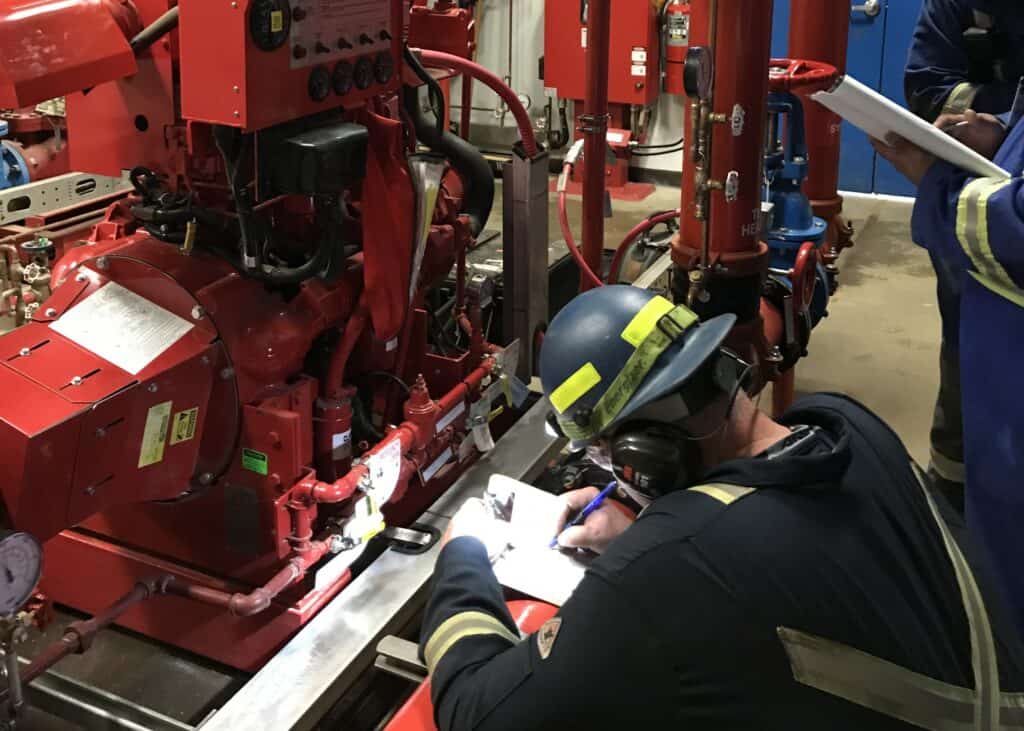
Rotaflow offers inspection, testing, maintenance and compliance services for industrial fire protection systems to help facilities increase reliability, operational safety and satisfy NFPA and Alberta fire code standards.
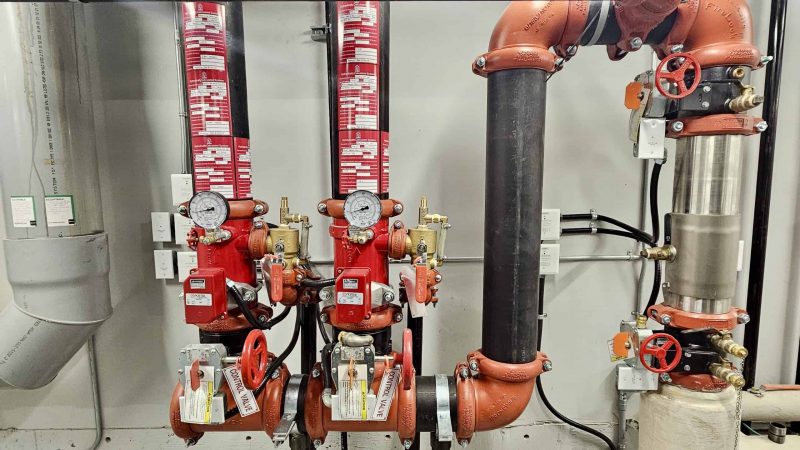
Rotaflow inspects, tests and maintains wet, dry, pre-action and deluge sprinkler systems in industrial and commercial establishments. Services include valve inspections, pipe assessments, flow testing, obstruction checks and repairs to help maintain reliable fire suppression performance and conformity with NFPA regulations.
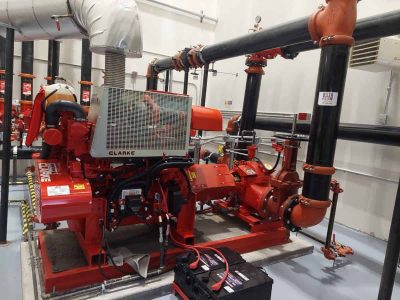
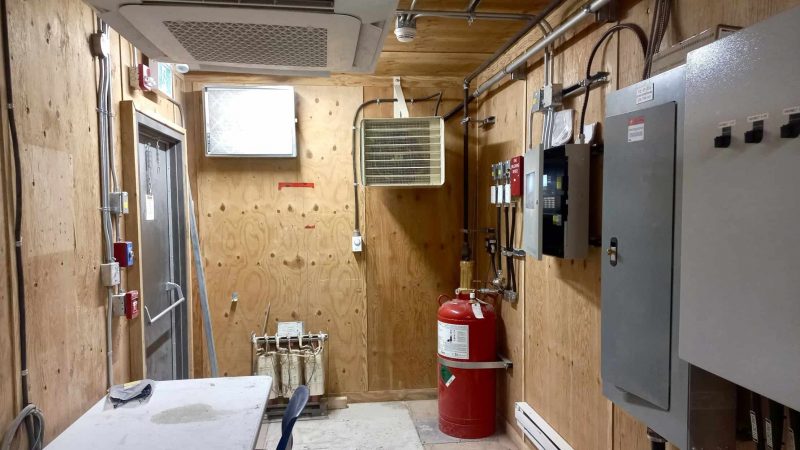
Rotaflow inspects, tests, maintains and refills clean agent and dry chemical fire suppression systems in critical and high risk environments. Routine servicing helps to guarantee quick fire suppression performance, system dependability and compliance with applicable fire protection requirements.
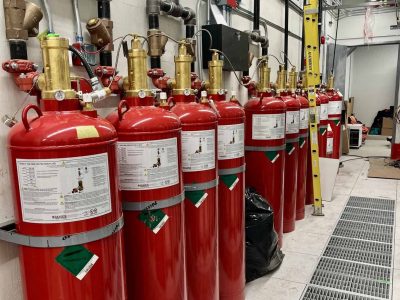
Water mist, foam suppression and compressed air foam system maintenance services include nozzle inspection, pressure testing, piping evaluation and system performance verification to help ensure reliable protection for hazardous industrial applications.
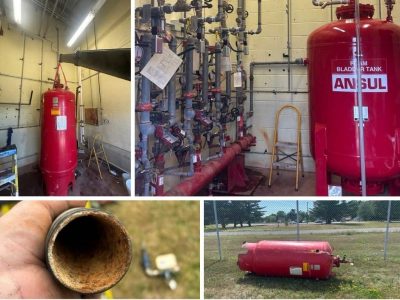
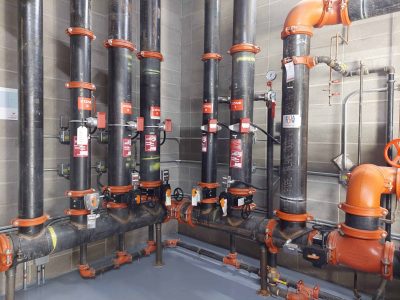
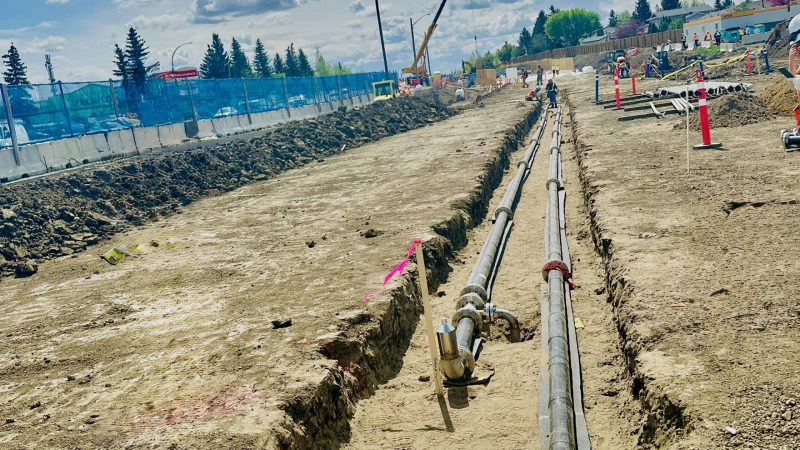
Standpipe Systems and Underground Fire Mains Inspection and maintenance services include pressure testing, flushing, leak detection, valve servicing and winterisation support to help prevent system failures in cold-weather situations.
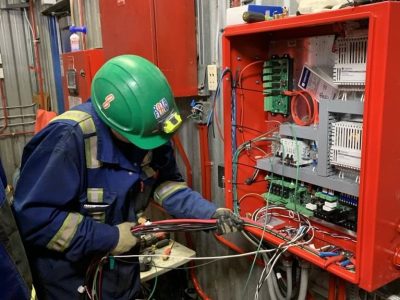
Rotaflow Service and Inspection of fire alarm and gas detection systems comprising smoke detectors, heat detectors, notification devices and control panels. Complete testing and reporting helps buildings stay compliant with NFPA and Alberta fire code standards.
Rotaflow ensures the highest level of safety for critical industrial operations, particularly in high-risk sectors such as oil and gas.
Rotaflow has extensive experience in maintaining, designing, and installing complex process safety, SIS, and EIC systems.
Rotaflow understands the unique challenges in this high-risk sector and provides customised safety solutions.
Rotaflow employs Red-Seal certified professionals to ensure the highest standard of fire protection system installation and maintenance.
NFPA 25 says that most types of tanks should be inspected internally every 5 years for pitting, corrosion, spalling, deterioration, debris and aquatic growth. Tanks equipped with a supervised water level alarm per NFPA 72 are only required to check water level quarterly, whereas tanks without such supervision need to inspect water level monthly – meaning the inspection schedule actually depends on what monitoring equipment is already in place.
NFPA 25 states that tank heating systems with a supervised low-water-temperature alarm connected to an attended constantly attended location must be inspected only quarterly during the heating season. However, heating systems without that alarm supervision must be inspected daily during the heating season — a large labour differential, driven only by the existence or non-existence of alarm supervision.
NFPA 2001 requires periodic “puff testing” of clean agent systems every 24 months. This is a full functional test of all alarms, controls and time delays associated with the system – not simply verifying the agent cylinder pressure/weight is still in tolerance, but verifying the entire detection and release sequence still correctly activates when called upon.
NFPA 25 requires that if evidence of interior pitting, corrosion, or coating failure is noted in a steel tank, the tank must be tested in accordance with the tank testing requirements of the standard. Thus, visible deterioration during the course of inspection is not merely noted, but rather initiates a mandatory follow-up test rather than being handled on a routine basis.
NFPA 25 usually requires an annual main drain test for each system riser, but if the only water supply goes through a backflow preventer or pressure-reducing valve, then at least one system downstream of that device shall have its main drain test performed quarterly instead, as those components can develop restrictions that a once-a-year test might miss for too long.

From scoping and detailed design to construction and maintenance, if you’ve got questions or ideas you would like to share, send a message.