Home / Fire Alarm Systems with Autocall
Rotaflow provides system design, equipment selection, installation, and support services for Autocall fire alarm systems used in commercial and industrial facilities
Rotaflow provides Autocall fire alarm system support, installation, and technical expertise for commercial and industrial fire protection applications.
Rotaflow offers Autocall fire alarm systems and support services across Alberta, British Columbia, Saskatchewan, and Manitoba.
Proven experience in support of fire alarm projects for commercial, industrial and high risk facilities.
Support in the selection of fire alarm systems, application requirements and project specific design requirements.
Experienced professionals with experience in complex fire alarm and integrated fire protection systems.
Fast response service and reliable long term support for Autocall fire alarm system projects.
Rotaflow provides Autocall fire alarm system design, installation, inspection, and maintenance services for reliable code-compliant fire protection.
At Rotaflow, we will install a commercial or industrial Autocall fire alarm system according to the project specifications with an emphasis on compliance, accuracy and reliable operations.
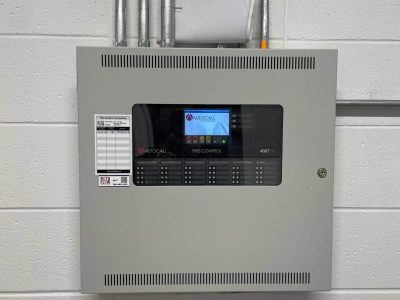
By providing inspection, testing, maintenance and repair of Autocall fire alarm systems, we will help maintain the continued compliance and reliability of those systems.
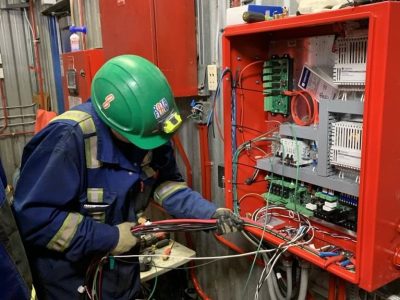
We will design and engineer a fire alarm system specifically for your project needs, building size and site conditions; and with the consideration of all applicable fire codeas.
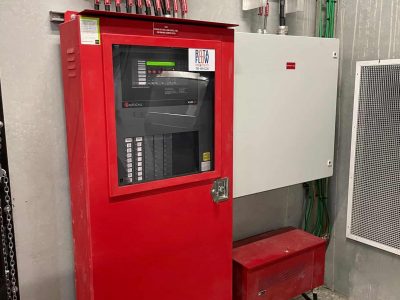
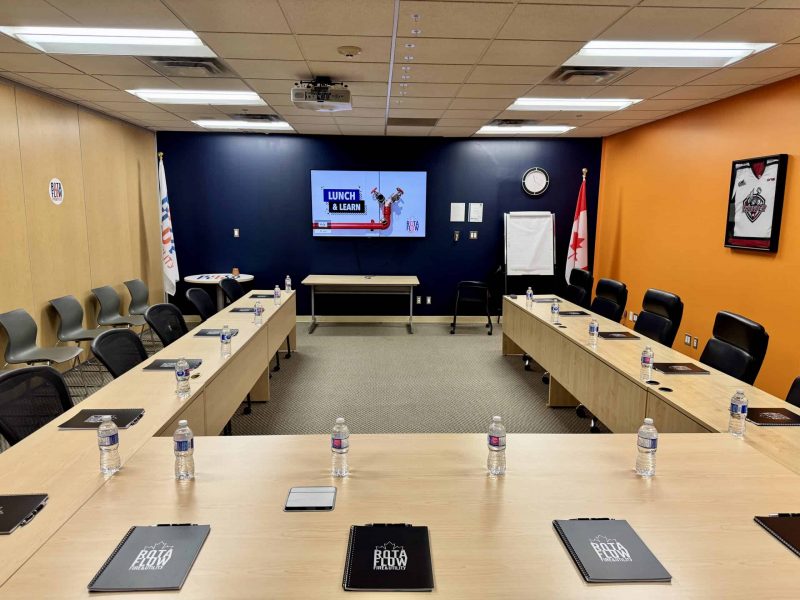
Book a Lunch & Learn with Rotaflow to learn about Autocall fire alarm systems and discuss project needs, guided by experienced fire prevention professionals.
A conventional fire alarm system divides a building into zones and identifies fire only by zone, not by the exact device. An addressable fire alarm system assigns a unique address to each device, allowing precise identification of the detector or pull station in alarm. Addressable systems are better suited for large or complex buildings where faster response and accurate location tracking are critical.
Smoke detectors respond to the presence of smoke particles and provide early warning in areas like offices, corridors, and residential spaces. Heat detectors activate when a fixed temperature is reached or when temperature rises rapidly, making them suitable for kitchens, mechanical rooms, or dusty environments where smoke detectors may cause false alarms.
Smoke detectors respond to the presence of smoke particles and provide early warning in areas like offices, corridors, and residential spaces. Heat detectors activate when a fixed temperature is reached or when temperature rises rapidly, making them suitable for kitchens, mechanical rooms, or dusty environments where smoke detectors may cause false alarms.
NFPA 72 addresses pathway survivability requirements specifically tied to whether a system supports relocation or partial evacuation strategies, since delaying full-building notification to move occupants in stages requires the underlying communication pathways to remain functional longer during a fire event than a system built for immediate, all-at-once evacuation. This is a key design consideration for large or multi-building sites where an “alert everyone everywhere immediately” approach isn’t practical or safe.
NFPA 72 provides pathway survivability levels (Level 0 through Level 3) that specify the degree of resistance the communication wiring or pathways in a system must be able to withstand damage during a fire event based on the system’s ability to support relocation/partial evacuation strategies. Two-way in-building wired emergency communication systems require Level 2 or Level 3 pathway survivability, an important consideration when designing a networked system for a large campus or multi-building complex, as higher-risk configurations require more robust, damage resistant wiring pathways.
NFPA 72 defines intelligibility as the quality of being understandable. Intelligibility is addressed in NFPA 72 as its own topic in an annexe, with specific design, installation and testing requirements for voice communication systems. This is not a subjective “sounds clear enough” standard – system commissioning documentation includes a formal intelligibility test as a required verification step, meaning speaker placement, room acoustics, and amplifier output all have to be engineered to meet a testable requirement, not just installed and assumed to work.
NFPA 72 requires that the in-building fire emergency voice/alarm communications system shall respond automatically to a signal indicating a fire alarm or other emergency, unless a signal is acknowledged within 30 seconds by a constantly attended trained monitoring location, in which case automatic response is not required. This difference is important for facilities that are considering a fully automatic evacuation message system as opposed to a system that has live, attended monitoring.
NFPA 72 specifies that documentation of remote station service be maintained as part of the system’s formal record – an important consideration for facilities that take advantage of Autocall’s networked, centrally monitored configurations across multiple buildings. Proper documentation of how each remote signal path is monitored and serviced becomes part of demonstrating ongoing code compliance, not just at installation but throughout the system’s service life.
Many different types of businesses and facilities trust autocall fire alarm systems:
Buildings for business
Scalable fire alarm systems that change as tenants’ needs and building layouts change are good for office buildings, shopping centers, mixed-use developments, and
business parks.
Autocall fire alarm systems are smart and advanced ways to detect fires and keep people safe in commercial, industrial, and institutional buildings. Autocall systems are built to be reliable, scalable, and work well for a long time. They help keep people, property, and important operations safe.
Rotaflow is an authorized distributor of Autocall fire alarm systems in Alberta, British Columbia, Saskatchewan, and Manitoba. We help consulting engineers, contractors, and facility owners by giving them reliable products, technical help, and quick local support.
Autocall has flexible solutions that will help you with a new construction project, updating an old fire alarm system, or managing a facility with multiple buildings. These solutions will help you meet your performance, compliance, and future needs.
Many different types of businesses and facilities trust autocall fire alarm systems:
Buildings for business:
Scalable fire alarm systems that change as tenants’ needs and building layouts change are good for office buildings, shopping centers, mixed-use developments, and business parks.
Campus and education facilities:
Schools, colleges, and universities need networked systems that allow for centralized monitoring, phased growth, and minimal disruption when the fire suppression system is turned off.
Health care and hospitality:
Smart detection and emergency voice communication are important for hospitals, long-term care facilities, and hotels to make sure that evacuation procedures are safe and orderly.
Utilities, Oil & Gas, and Industry:
Fire alarm systems that are built to last and work well in tough, high-risk environments are needed for sites with complicated layouts.
Transportation and Infrastructure:
Airports, transit centers, and logistics hubs need advanced fire alarm systems that can work in large, crowded areas and keep running all the time.
Control Units for Fire Alarms
Autocall fire alarm control panels are the brains of the system. Their modular design lets systems be set up to meet current needs and leaves room for future growth.
Some of the most important features are:
Autocall detection devices are made to detect fires early and accurately while also cutting down on false alarms.
You can choose from:
During emergencies, it is very important to notify people clearly and effectively. Autocall notification solutions make sure that alerts are clear and on time.
The system can do the following:
These systems can be used for both automatic and manual evacuation plans. Networking, Annunciation, and Putting Systems Together
Autocall fire alarm systems are great for buildings that need to be able to control and watch everything from one place. Some of the system’s features are:
Autocall is a great choice for complicated facilities with changing operational needs.
Autocall fire alarm systems are built to meet all relevant fire and life safety codes, such as CAN/ULC and NFPA standards.
Rotaflow works closely with consulting engineers, contractors, and Authorities Having Jurisdiction (AHJs) to make sure that all of Alberta, British Columbia, Saskatchewan, and Manitoba follow the rules.
We want to help make sure that your fire alarm system meets the requirements of the project, the law, and your long-term business goals.

From scoping and detailed design to construction and maintenance, if you’ve got questions or ideas you would like to share, send a message.