Project Overview:
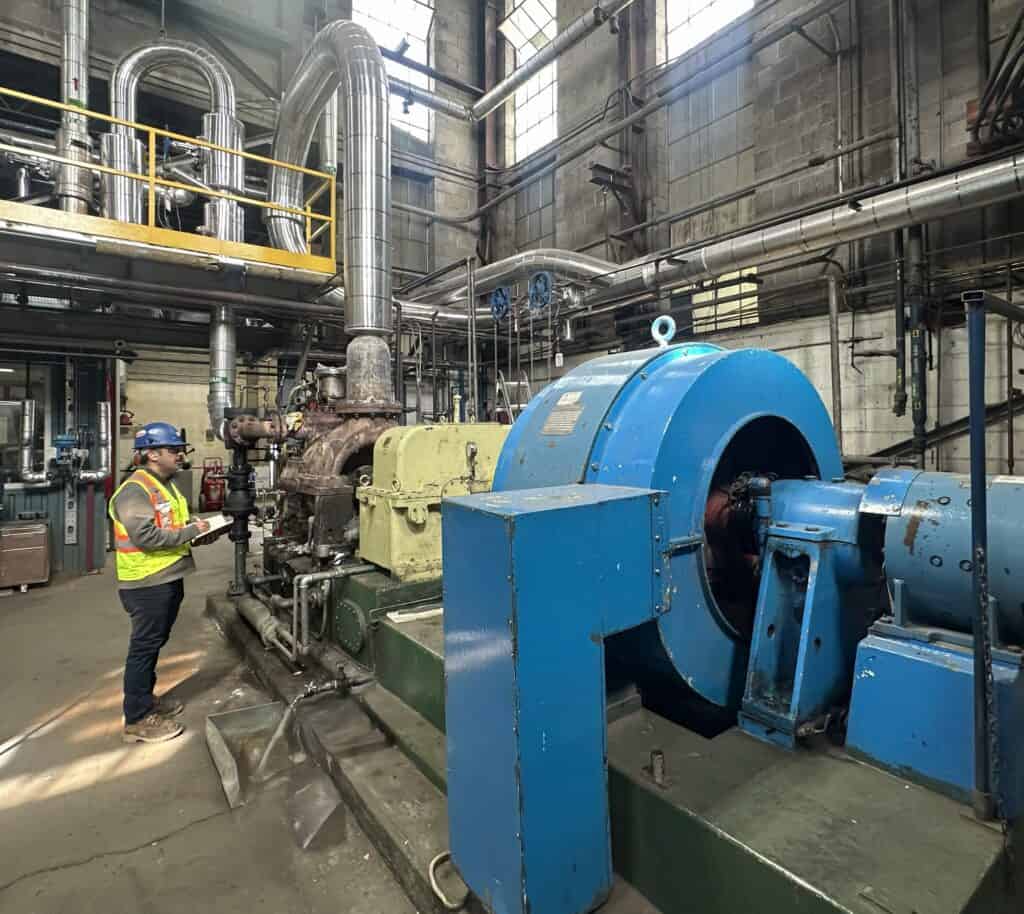
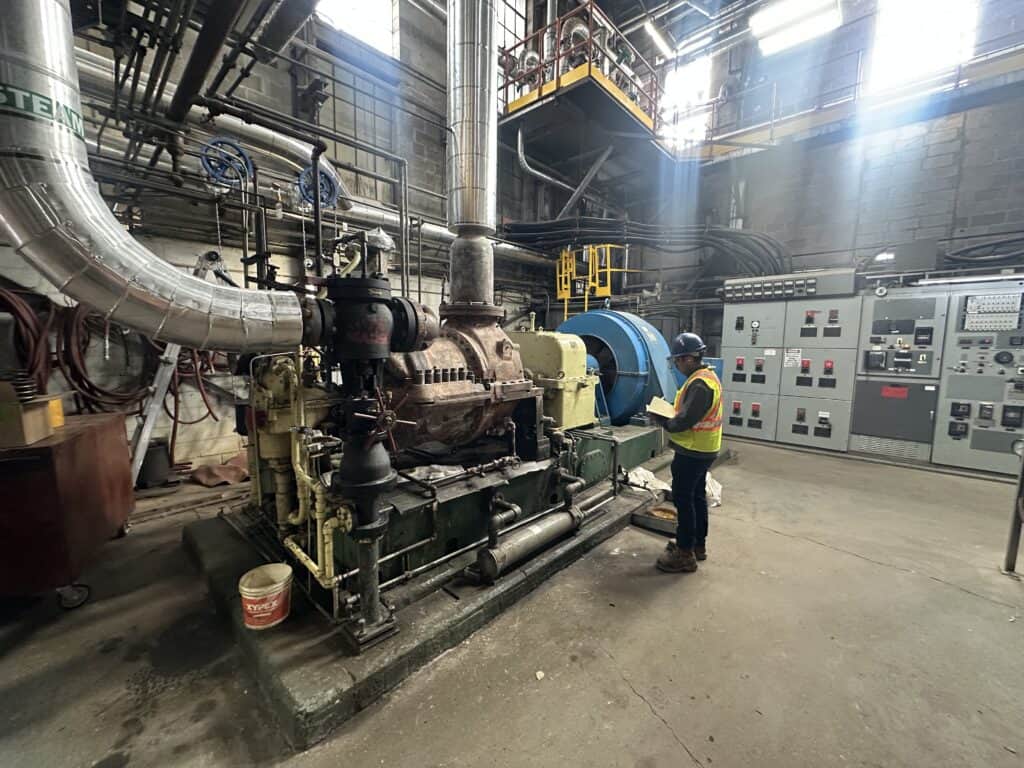
An industrial manufacturing facility was requested by its insurance provider to evaluate the fire risks associated with an existing steam turbine oil system. Concerns were raised that an oil release could create a pool fire, exposing nearby critical equipment and disrupting operations. Rotaflow was engaged to perform a comprehensive code study and Oil Fire Hazard Assessment (OFHA) to evaluate the hazard, review applicable code requirements, and develop practical fire protection and risk mitigation recommendations.
The Challenge:
The facility’s industrial insurer identified concerns with the existing steam turbine oil system and required the owner to assess and address the potential fire hazards associated with a credible oil release scenario. Specifically, the insurer required the facility to evaluate spill containment, emergency drainage, and fire protection measures in accordance with FM Global recommendations and applicable NFPA standards.
A major release of turbine oil could result in a pool fire, spray fire, or three-dimensional spill fire capable of exposing adjacent equipment, including a nearby steam generator. The facility needed a practical, code-compliant approach to:
- Identify credible oil release and fire scenarios.
- Evaluate potential impacts on adjacent critical equipment.
- Assess spill control and containment requirements.
- Review emergency drainage requirements.
- Determine appropriate fire detection and suppression strategies.
- Satisfy insurer recommendations while minimizing operational impacts.
Rotaflow’s Solution:
Rotaflow conducted a detailed Code Study and Oil Fire Hazard Assessment (OFHA) to determine the most effective strategy for protecting the steam turbine and surrounding equipment from oil fire hazards.
The assessment included a thorough review of the existing turbine arrangement, possible oil release scenarios, fire exposure risks, emergency shutdown capabilities, spill containment options, and fire protection alternatives. Rotaflow reviewed the applicable FM Global Data Sheets, including FM Global Data Sheets 7-101 and 7-83, together with key NFPA standards such as NFPA 30 and NFPA 850, to establish a practical and insurer-aligned protection strategy.
Following the hierarchy of controls, Rotaflow developed recommendations covering:
- Substitution to FM approved industrial fluids / fire-resistant oil.
- Oil-release prevention through an inspection and maintenance program.
- Emergency shutdown considerations.
- Spill containment and emergency drainage strategies.
- Leak detection systems.
- Fire detection and suppression solutions.
Protection of adjacent critical equipment.