Home / FireDos Firefighting Equipment
For FireDos systems, Rotaflow provides solutions that are comprised of design and engineering, installation, and maintenance services.
Rotaflow delivers FireDos system design, installation and maintenance services for reliable foam proportioning and industrial fire protection integration.
Services for the design, engineering, installation and maintenance of FireDos systems.
Rotaflow provides help for fire protection projects for industrial and high risk facilities.
Rotaflow offers FireDos fire fighting equipment and support services across Western Canada.
FireDos systems achieve accurate foam proportioning independent of electrical power.
Rotaflow offers prompt service and long-term support for fire protection systems.
Rotaflow provides FireDos system design, installation, commissioning, and maintenance services for reliable foam fire protection performance.
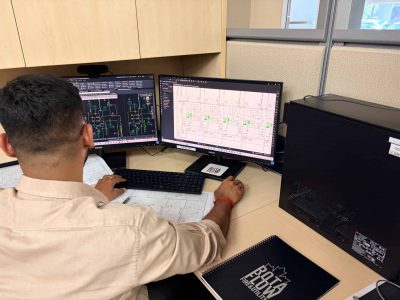
Rotaflow engineers design FireDos systems based on application requirements, regulatory coding, and facilities’ existing fire protection systems.
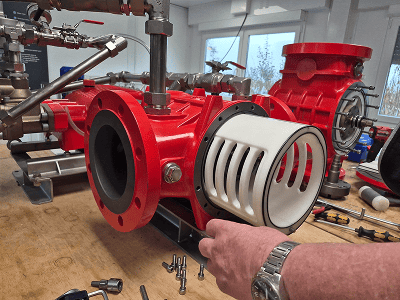
Rotaflow technicians install and commission FireDos equipment to ensure accurate operation, dependable foam proportioning, and long-lasting serviceability.

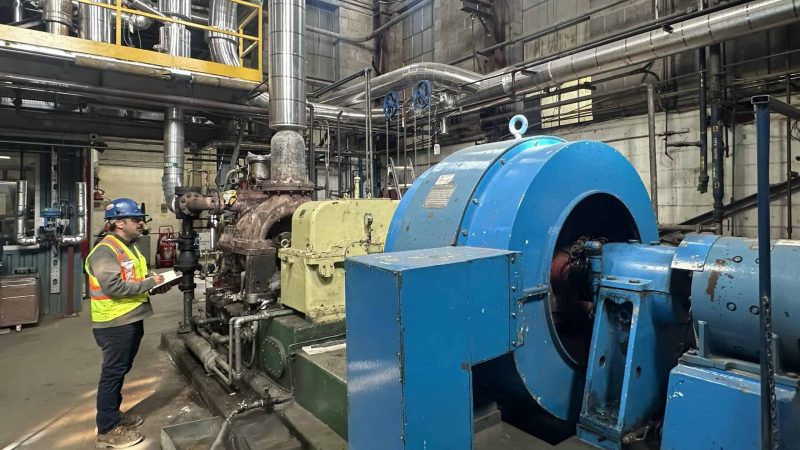
Rotaflow performs inspections, testing, scheduled maintenance, and repairs to maintain compliance and full operation for FireDos systems.
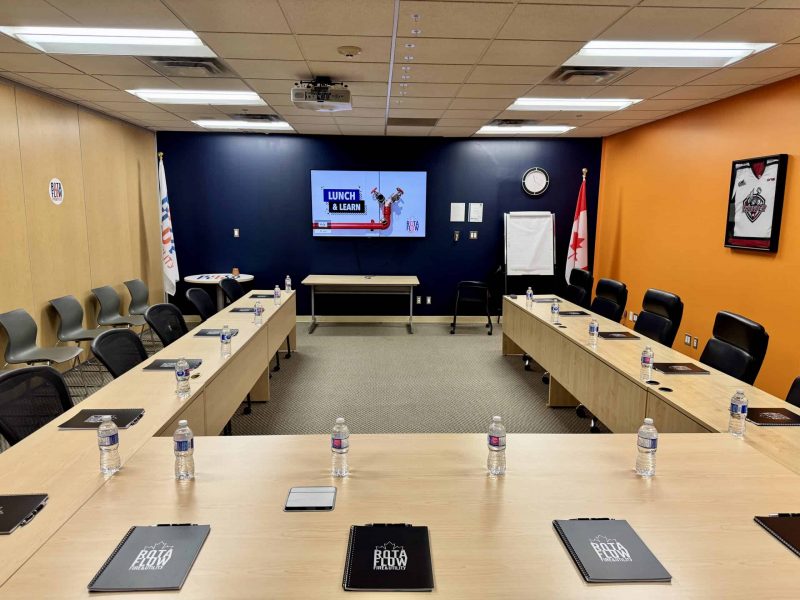
Book a Lunch & Learn session with Rotaflow to explore FireDos systems, discuss project requirements, and get guidance from experienced fire protection professionals.
NFPA 11 specifically prohibits the use of monitor nozzles as the primary method of protection for fixed-roof tanks with a diameter greater than 18 meters (60 feet). This is an important design constraint for facilities such as tank farms. A monitor-based system such as FireDos’s may need to be combined with another fixed protection method beyond that tank diameter, rather than just relying on monitors alone.
NFPA 11 provides two methods of automation – fully automatic detection and actuation (subject to the applicable design criteria in NFPA 72) and actuation by push-button stations or other manual release methods. The standard also states that manual-only operation is permitted where acceptable to the AHJ — meaning the level of automation is not just a design preference, but rather a decision that must meet the specific response time needs of the hazard and the acceptance of the AHJ.
NFPA 11 describes the use of a handheld, temperature compensated refractometer to check foam solution concentration by placing a sample on the prism and reading the refractive index. This is a method that helps verify proportioning accuracy without the need to fully discharge and waste foam concentrate. This ties directly into non-destructive proportioning rate testing capability where a lower-waste verification method reduces the environmental impact and cost of routine testing.
NFPA 11 annexe guidance specifically states that the manufacturers of the monitor nozzles should be consulted for specific performance criteria including stream range, foam pattern, discharge capacity, and pressure requirements. This is a reflection of the fact that monitor and nozzle performance varies considerably by manufacturer and model. The code sets the framework of where and how monitors must be applied, while equipment specific throw distance and flow performance is validated against the manufacturer’s own tested specifications.
Annex guidance in NFPA 11 identifies traffic patterns, possible obstructions, wind conditions and effective foam nozzle range as the primary concerns in monitor placement, with the purpose of assuring the foam reaches the entire protected area at the needed application rate. This is especially relevant for large open sites such as tank farms or loading racks in which the monitor’s rated throw distance on paper may not be sufficient to achieve effective coverage if wind or obstructions are not considered in the layout.
Many different types of businesses and facilities trust autocall fire alarm systems:
Buildings for business
Scalable fire alarm systems that change as tenants’ needs and building layouts change are good for office buildings, shopping centers, mixed-use developments, and
business parks.
These units offer purely mechanical, highly reliable foam agent proportioning, critical in environments where electrical power may be unreliable or unavailable during emergencies.
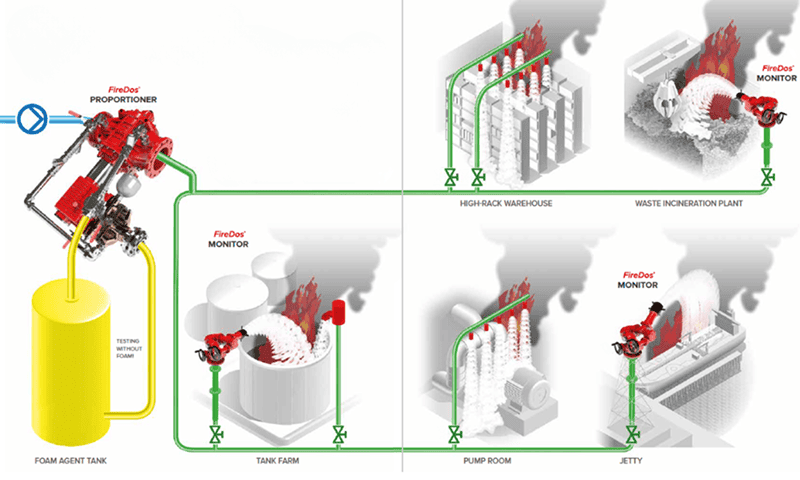
FireDos proportioners use a water-driven motor and piston pump system to inject foam concentrate into the water supply with consistent accuracy. They operate independently of electricity, ensuring performance even in remote or high-risk installations.
Flow Ranges: Suitable for water flow rates from 70 to 25,000 litres per minute
Proportioning ratios come in the following configurations:5%, 1%, 3%, 3+3%, and 6%.
Compatible with All Foam Types: Can handle high-viscosity, alcohol-resistant, and fluorine-free foam agents
Unlimited Operation Time: The non-pressurized foam agent tank can be refilled at any time, allowing
uninterrupted firefighting.
FireDos proportioners inject foam concentrate consistently and accurately into the water supply using a water- driven motor and piston pump system. They guarantee performance even in distant or high-risk installations since they run free from electricity.
One of the standout features of FireDos stationary proportioners is their non-destructive testing capability. By enabling proportioning rate testing without the need for foam concentrate or premix production, the technology lowers waste, its impact on the environment, and its operating expenses.
Large volumes of water or low-expansion foam can be precisely applied across great distances by FireDos firefighting monitors. Refineries, jetties, tank farms, high-hazard facilities, industrial and petrochemical applications, and refineries fit these monitors with flow rates between 500 and 60,000 litres per minute.
For better targeting, FireDos monitors have broad swivel capabilities:
These swivel ranges offer flexibility and precision when responding to dynamic fire scenarios.
Unlike conventional systems, FireDos monitors allow extinguishing agent flow rate adjustments during full-pressure operation, providing better control and efficiency during firefighting.
Direct current (DC), alternating current (AC), and three-phase systems are only a few of the electrical drives FireDos firefighting monitors accept. Either portable or permanently mounted, the monitors can be included in fixed fire suppression systems and remote control panels to enable total control over positioning, oscillating movement, system diagnostics, and auto-testing.

From scoping and detailed design to construction and maintenance, if you’ve got questions or ideas you would like to share, send a message.