Signage is typically not the first thing that comes to mind when considering sprinkler ITM. However, signs make it easier for facility employees and emergency responders to find important parts and run the system in an emergency. The difficulty? One of the most misinterpreted aspects of NFPA 25 inspections is signage. Inspectors frequently point out missing, unenforceable signs while ignoring those that are necessary.
The 2024 ICC Codes, which make reference to the 2022 and 2023 editions of NFPA 13 and 25, are the basis for this technotes.
Field rule to keep in mind: It is enforceable if it is in NFPA 25 Chapters 5–14.
If it only exists in NFPA 13, document as an observation, not a deficiency.
“You can’t do it if it’s not on the table.”
Under NFPA 25, signs are not enforceable.
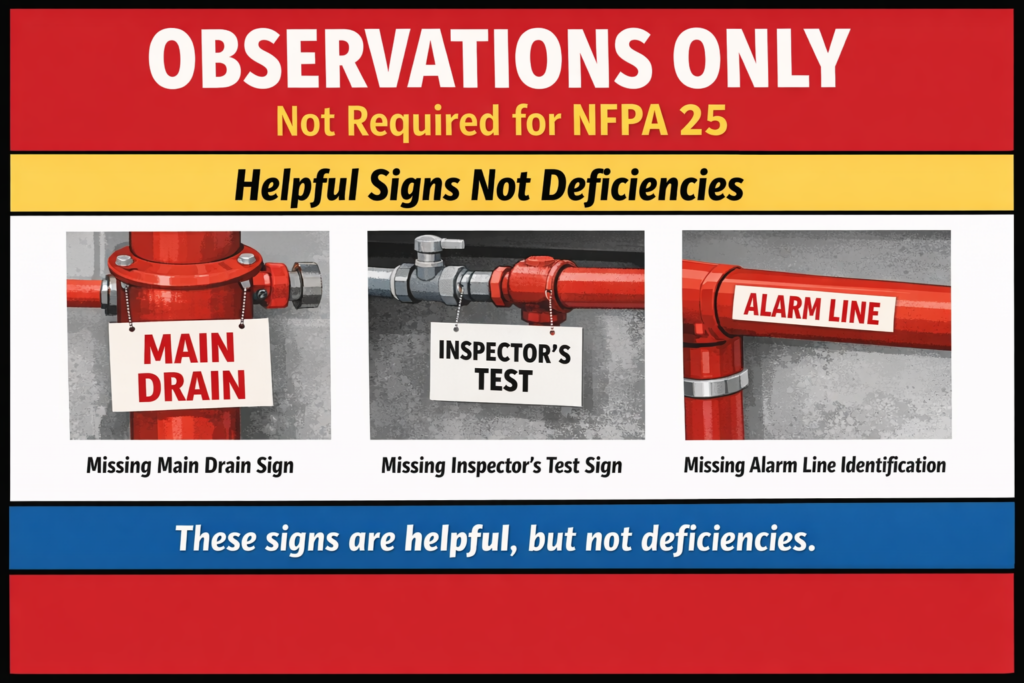
The following are NFPA 13 installation standards; however, NFPA 25 does not mandate their maintenance. These absent indicators ought to be recorded as “observations only”:
primary drain indicators
The test signs of the inspector
Identification of alarm lines
These indicators are not flaws; rather, they are beneficial.
Signs NFPA 25 Requires
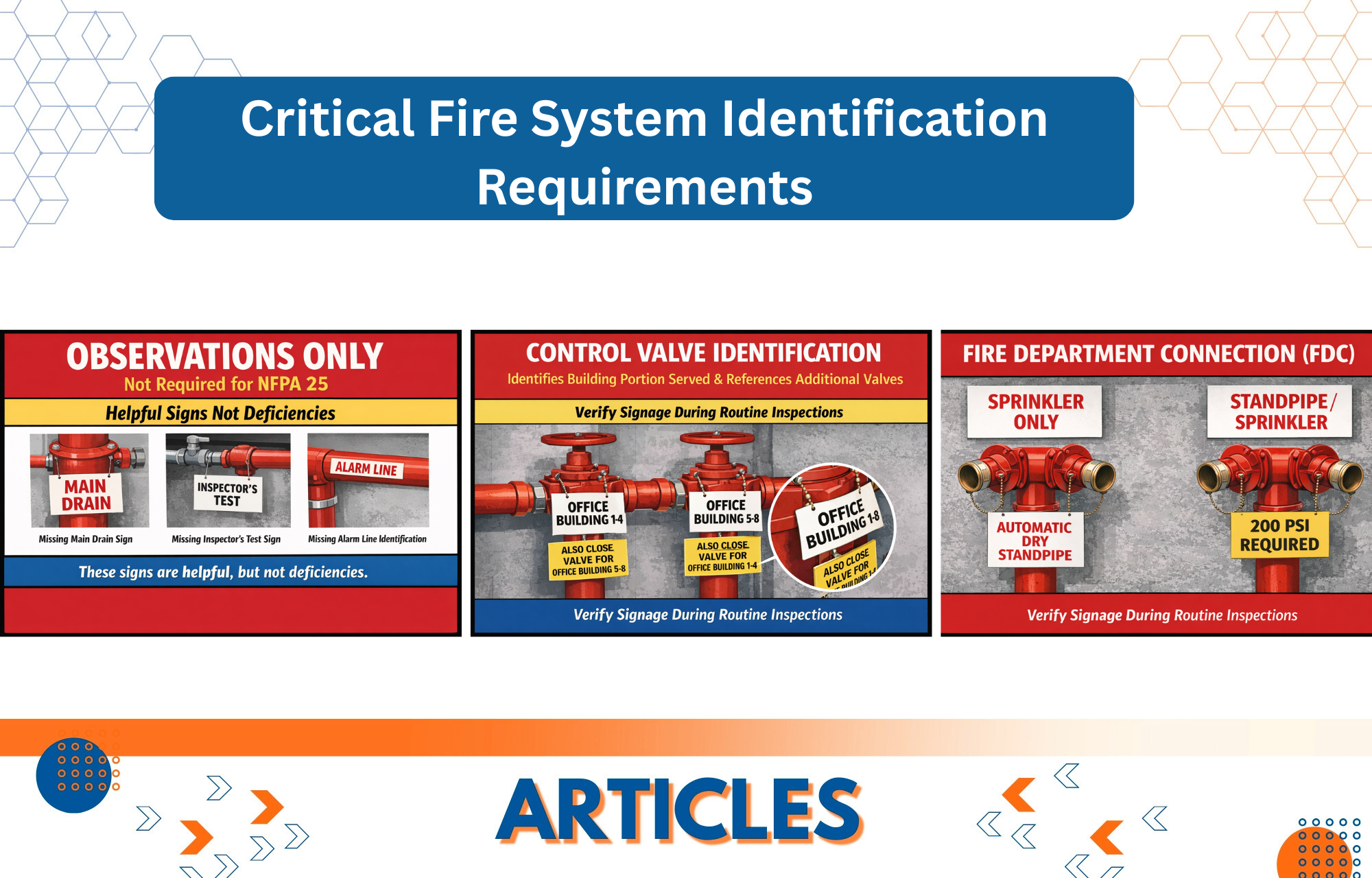
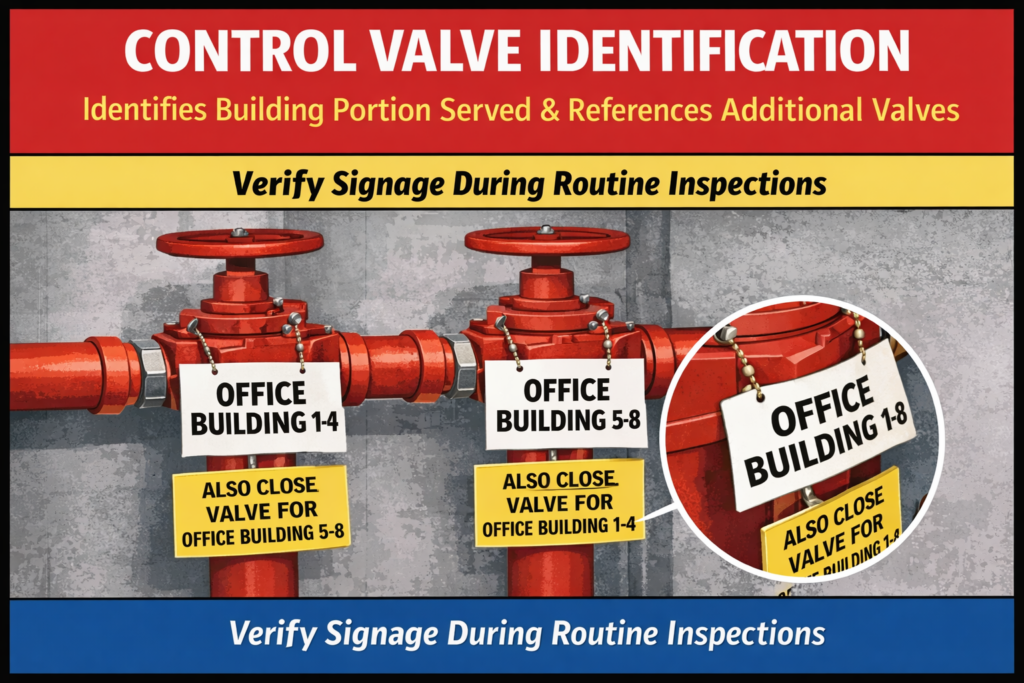
1) Control Valve Identification: Each control valve needs to indicate the area of the building it serves. In order to isolate a system, several valves must cross-reference one another. Best practice: verify signs during routine valve inspections (weekly / monthly / quarterly, depending on supervision).
2) Hydraulic Design Information Sign: This sign is applicable to pipe schedule systems and hydraulically designed systems. Every system riser must have an annual inspection for:
- Presence
- Legibility
- Safe and long-lasting connection
3) Information Sign (Auxiliary Systems): Needed for systems like:
- Pipes that are dry
- Preaction
- Systems of antifreeze
The area that the valve controls must be stated explicitly. examined once a year.
4) General Information Sign: Since 2007, NFPA 13 has mandated this. NFPA 25 has been in effect since 2014. includes comprehensive system data.
Important: Annex A makes it clear that this sign can also meet the requirements of the Information Sign.
5) The 2017 edition included the Antifreeze System Sign. examined once a year.
Included must be:
- Manufacturer
- Volume of the system
- Type/brand
proportion of the solution
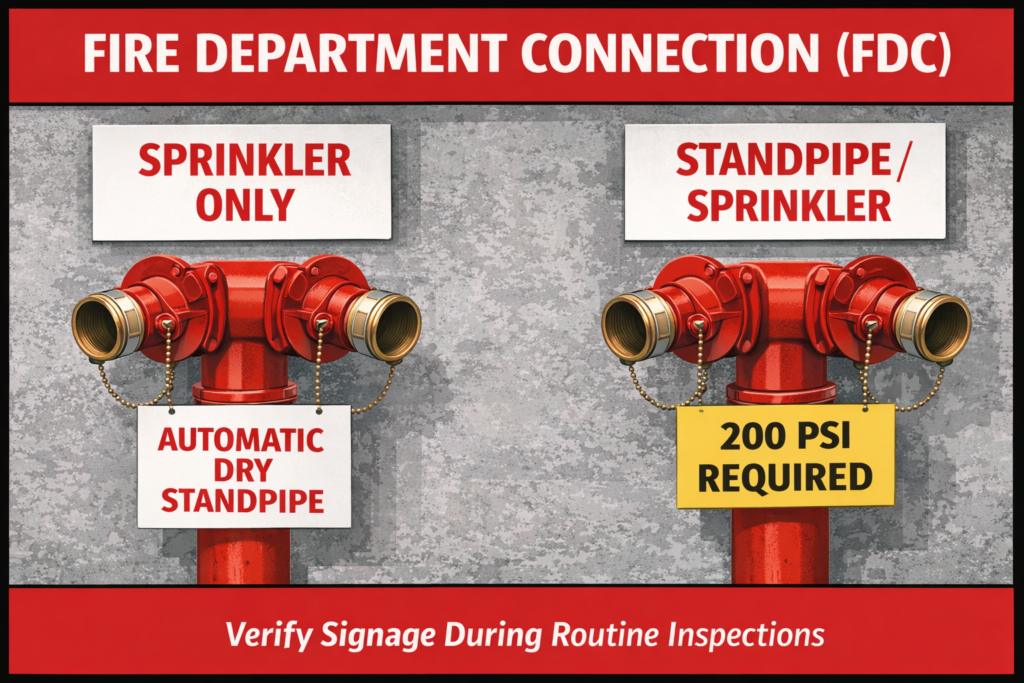
6) Fire Department Connection (FDC): This is a frequently overlooked prerequisite. FDC signage needs to indicate:
- Sprinkler, standpipe, or hybrid system served
- Wet or dry manual standpipe
- The necessary pressure must be specified if pumping must be higher than 150 psi.
 Special Note: Lists of Control Valves
A list of control valves must be kept up to date by building owners.
- This isn’t signage.
- NOT a shortcoming
- Owner accountability
Record any missing information as an observation.
A brief overview of the field
Possibly Listed as Deficiencies
- Identification of control valves
- Sign for hydraulic design
- Sign for information or general information
- The antifreeze symbol
- FDC identification
Just Observation
- primary drain indicators
- The test signs of the inspector
- Identification of alarm lines
- Lists of control valves
The bottom line
Your inspections will remain accurate, consistent, and defendable if you keep installation requirements apart from ITM requirements.