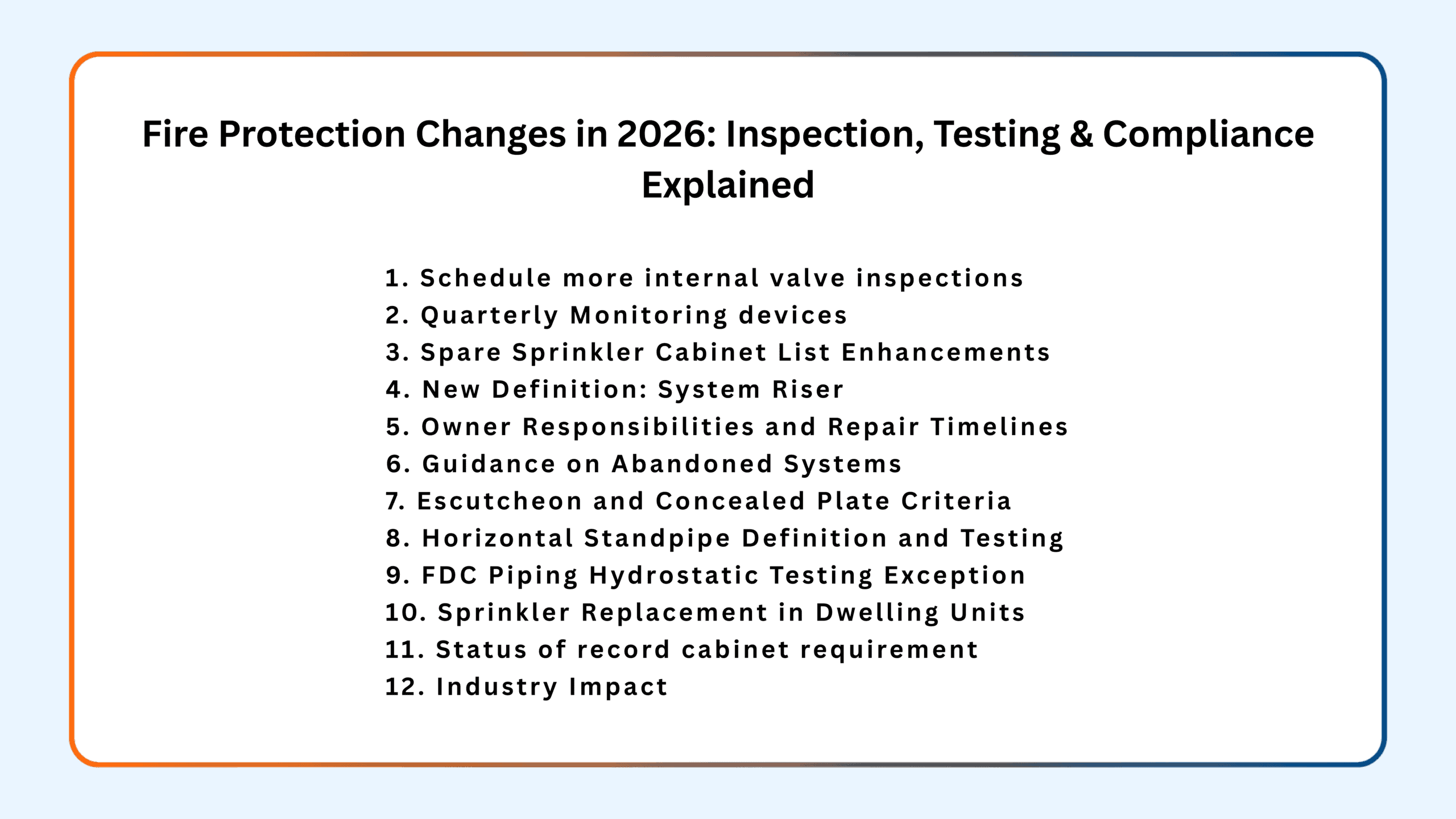
An important proposed revision would mandate annual internal inspections on all preaction and deluge valves instead of the current five years. This shift is in line with continuing reliability issues for these types of systems, and will cause more frequent ITMs and consume related labor hours.
Quarterly testing is now required on solenoid-operated releasing devices typically used in preaction and deluge systems. This also requires a more stringent electrical/mechanical interface reliability verification for these systems.
Spare sprinkler cabinet listing the type and quantity of each class of sprinklers installed in the building Also, the model number of the specific sprinkler wrench.
Introducing a formal definition of a system riser This might be at odds with years of field interpretations and could affect system identification, inspection procedures, and reporting consistency. This means that nearly every floor becomes a riser, if it has certain elements. Don’t forget a hydraulic info sign and an informational sign are required at the system riser.
Changes to the section on responsibilities of the owner clarify that deficiencies shall be corrected within a time frame acceptable to the Authority Having Jurisdiction (AHJ). Structures with more serious deficiencies are prioritized Similarly, supporting annex language offers recommended repair timeframes related to deficiency severity, leading to more consistent enforcement and prioritization.
New language is included to address abandoned in place sprinkler systems. It will also help reduce uncertainty and enhance safety by clarifying expectations around securing or documenting these systems.
New requirements have been added for escutcheons that are missing, damaged or painted over and for concealed cover plates. The revisions also are intended to provide more consistent identification of deficiencies that could affect sprinkler performance.
A new definition for horizontal standpipes, as well as language in chapter 6 that will require testing of these systems has been added in Chapter 3; this closes a hole, which has historically resulted in an inconsistent application of the requirements out within the field.
Hydrostatic testing may not be required on working Fire Department Connection (FDC) piping 10 feet or less where both internal and external cannot be visually examined. This shift to testing only short sections of pipe is a pragmatic, risk-based approach.
New 50-year requirement for replacing standard response sprinklers within dwelling units
Although the technical meeting approved a proposed requirement for a dedicated record cabinet, it eventually failed in the ballot. This not adopted indicates continued focus on documentation and rule availability.
The changes would increase the frequency of inspections, tighten documentation requirements, and clarify definitions, all of which will have direct impacts on contractors, building owners and AHJs. The trend is unmistakable: More accountability, better system reliability, and more standardized enforcement.
For contractors, this means:
Increased inspection and testing scope
Expanded documentation requirements
More coordination on repair timelines with AHJs
These changes provide owners and AHJs with more defined expectations, as well as higher-quality tools to ensure that systems are adhered to and function properly.
Final Thoughts
This primer showcases just some of the changes coming with NFPA 25, 2026 Edition. When jurisdictions adopt new editions of codes and standards, these changes will have a direct impact on compliance requirements and operational practices.
Staying informed is critical. Stakeholders being able to understand not just what has changed, but why, will enable better implementation of compliant ITM programs and avoidance of deficiencies that can ultimately help preserve reliable fire protection systems. Other information, including the rationale for changes, can be found via the NFPA code development process.