
Fire dangers in industrial settings including chemical plants, oil and gas terminals, power stations and manufacturing units aren’t only minor, localised catastrophes. They generally include storing a lot of fuel or chemicals, process equipment, and high-hazard areas where fires can spread quickly or where there are very high heat loads that need strong suppression systems. This blog talks about how deluge systems, fire water deluge skids, foam suppression systems, and PFAS-free firefighting foams (sometimes called fluorine-free foams) are designed and used in these kinds of places. It also talks about how bundled suppression skid packages offer complete solutions. Let’s discuss design issues, where to use these technologies, government and environmental trends, and how a company like Rotaflow Fire & Utility uses these technologies together to make them as safe and reliable as possible.
What is a deluge system?
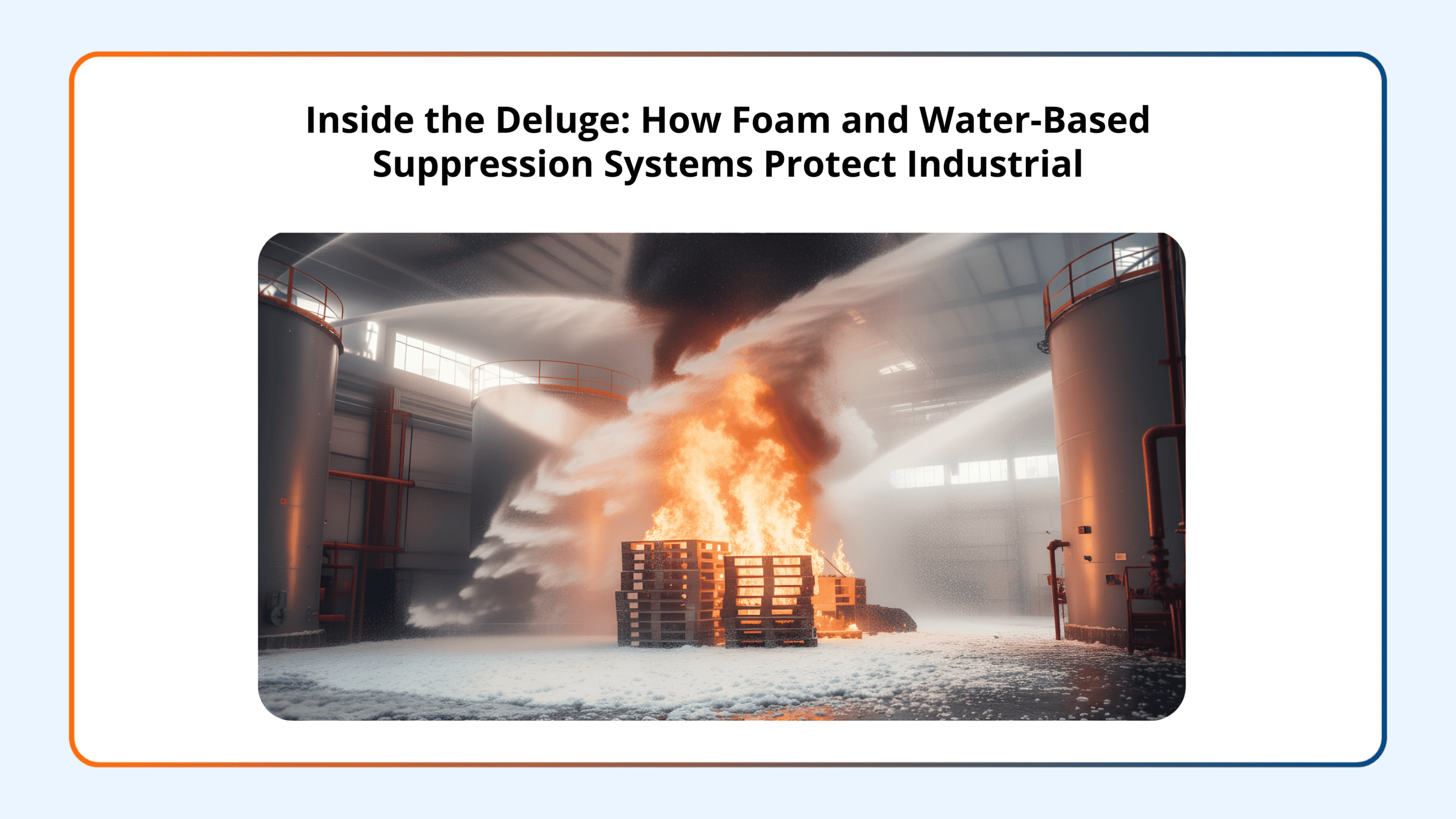
A deluge system is a fire defence system that has pipes that are filled or primed (or occasionally dry) that are connected to a water source and open nozzles. When the system is turned on (by detecting heat, flames, or smoke, or by a manual trigger), it releases a large amount of water (or a mixture of water and foam) over the entire protected area virtually at the same time.
Deluge systems are different from regular automatic sprinkler systems because they are meant for high-hazard areas where fires are expected to spread quickly or where the fire load or fuel type (like flammable liquids) requires full-area flooding or blanket application of suppression agent.
Deluge systems are utilised in factories to safeguard places like tank farms, chemical storage, aircraft hangars, transformer rooms, pipelines, generator rooms, and other high-risk sites.
Deluge systems usually need a lot of water, fast flow rates, open nozzles that can quickly cover a vast area, and in many situations, they are connected to foam proportioning systems for liquid fuel fires.
Fire Water Deluge Skids & Modular Suppression Skid Packages
The use of modular skid-mounted systems, or “skids,” that hold the main parts of a deluge or foam/water system is a big step forward in industrial fire protection. These parts include valves, foam proportioners, deluge valves, piping headers, instrumentation, controls, pump interfaces, and often pre-wired electrical and instrumentation modules.
Pre-made and factory-tested fire water deluge skids are made to make installation easier in the field, lower the danger of mistakes, speed up the commissioning process and improve quality control. For instance, Rotaflow sells modular deluge skid solutions made for factories, chemical plants, refineries, and other similar places.
These packages could include:
- An assembly for a deluge valve that can be operated by air, water, or electricity
- Foam proportioner station for foam systems
- Piping headers and nozzles that are already put together
- Control panels and tools for finding and turning on
- Connections for E&I (Electrical & Instrumentation) that are already wired
- Testing and writing down information about the factory before shipping
Skid packages are valuable because they can be used over and over again, require less field welding and fabrication, ensure quality, and connect faster. These mechanisms make sure that the suppression system will work as planned when a fire breaks out, with as little doubt as possible.
It becomes a big engineering effort to connect a deluge system skid to the fire water supply, pump house, detection/alarms, foam concentrate storage, and monitoring systems in a big factory. Using modular packages makes that procedure easier.
Foam Suppression System
Water flooding works well for many types of fires, but when flammable liquids or a lot of fuel are involved, a foam suppression system is sometimes needed. These systems let out a mix of water and foam concentrate. The foam makes a blanket that keeps vapours from escaping, cuts off the oxygen supply, cools surfaces, and stops fires from starting again.
In deluge systems, the same network of open nozzles can be utilised to spray a foam-water mix instead of just water. Because of this, the system turns into a foam-water deluge system. Sources say that “a film-forming foam agent can be added to the extinguishing water” in deluge systems to help put out fires that spread quickly.
Industrial buildings that store hydrocarbons, process chemicals, load and unload fuel, have aviation hangars, or have vast open areas for storing fuel will commonly require foam suppression systems. One tutorial on “how to set up a foam fire suppression system for industrial facilities” talks about things like figuring out the risks, choosing the right foam concentrate, designing the proportioner, laying out the nozzles, and making sure the system works with detection and actuation.
Foam suppression materials include foam concentrate storage tanks, a proportioning system to combine foam concentrate with water in the right amount, piping and discharge devices, and detection/control equipment that can turn the system on automatically or by hand.
Standards and tests are used to judge how well foam suppression systems work. For instance, fluorine-free foam systems are being made and authorised for use with hydrocarbons and polar solvents.
PFAS-Free Firefighting Foam
Aqueous Film-Forming Foam (AFFF) concentrates that had PFAS (Per- and Polyfluoroalkyl Substances) were employed in a lot of foam suppression systems in the past, especially for hydrocarbon and polar solvent fires. But stricter rules and more attention from the public and the environment on PFAS have led to a shift towards firefighting foam or fluorine-free foam systems that don’t contain PFAS.
One company, for example, says that “synthetic fluorine-free foams (SFFF) offer a more environmentally responsible alternative” and that the first FM Approved fluorine-free fixed foam system for hydrocarbon and polar solvent applications has been introduced.
Important effects on industrial facilities:
- Facilities must determine if current foam deluge or water-foam systems utilising PFAS-based foams require upgrading or substitution with PFAS-free alternatives.
- To make sure the new foam fits with current discharge devices and nozzles and fulfils performance standards, systems may need to be retested or rechannelling.
- When PFAS use is limited or banned in some places, there are environmental compliance, regulatory reporting, and insurance issues that arise.
- The design of the foam system must make sure that all of its parts work together. The foam concentrate, proportioner, pipework, discharge devices, and mixing ratios must all be tested and authorised as a whole system.
When using PFAS-free foam in deluge skid packages for industrial protection, you need to make sure that the equipment is appropriate, that it works as promised, and that operations and maintenance staff get field training.
Things to think about while designing industrial deluge and foam systems
When building for industrial use, there are a few important things to keep in mind to make sure that suppression systems (water only or foam-water) work well:
Risk assessment
It’s important to know what kind of hazard it is: What fuels are there? Liquids that catch fire? Gases? Are there fire loads that move quickly? Possibility of spreading? What kind of fire is it (pool fire, jet fire, storage fire)? Based on the assessment, you choose between water-only deluge or foam-water deluge systems. You also decide on the discharge density, duration, coverage area, and suppression technique that are needed.
Water supply & flow rate
Deluge systems need a lot of water and a fast flow rate. The water supply (from the municipal mains, fire-water network, fire pump, or tank) must be big enough to handle the amount of water that needs to be released. Engineers need to make sure that the pump’s capacity, duration, backup, pipe size, and pressure drops are all taken care of.
Parts of the system: pipes, valves, and nozzles
Some of the most important parts include deluge valves (quick-opening, diaphragm-type), proportioners (for foam systems), open nozzles that cover the whole area, corrosion-resistant piping, detectors/actuators, alarms, and control panels. For instance, deluge valves can commonly be used with foam systems and can be put on skids.
Control & detection integration
The deluge system must go off right away when it detects heat, flame, or smoke automatically or when someone pushes a button. When using foam systems, the proportioner must mix the foam concentrate at the right ratio and send it to the nozzle network. Control panels, monitoring, and instrumentation are very important.
Modular skid vs. field-built
Using suppressing skid packages makes it possible to build things in a controlled environment, test them in a factory, and make installation easier. They might cut down on welding and fitting on-site, speed up commissioning, and make sure the quality is the same every time. According to Rotaflow, “modular deluge skid packages… engineered for industrial facilities… custom-built to align with facility design,” etc.
Integration with other safety systems
Fire alarms, emergency shutdown systems, building management systems, suppression monitoring, and emergency response protocols must all work with deluge and foam systems. It’s important to make sure that the logic for communication and activation matches up.
Environmental and regulatory compliance
When foam is involved, it’s crucial to choose solutions that don’t include PFAS and to make sure that discharge is contained, drainage is done properly, the environment isn’t harmed, and cleanup is done properly. It’s also important to check that the system works well under standards and approvals.
Reliability, testing, and maintenance
Regular maintenance and testing (flow tests, proportioning tests, and detecting systems) are needed for deluge and foam systems. To make sure they are ready, industrial buildings should have inspection programs. Modular skid packages generally come with test points and tools to make maintenance easier.
Rotaflow for Deluge & Foam Suppression Systems
Rotaflow has benefits for industrial buildings that want full fire protection:
- Design and engineering skills in modular suppression skid packages, such as deluge and foam systems, that meet facility risk assessment and regulatory compliance.
- An integrated service offering that includes everything from designing the system to making it, installing it, and maintaining it, as well as upgrading it (including PFAS-free foam system improvements).
- A modular strategy that cuts down on installation time in the field and improves quality through factory testing.
- Experience working in places with a lot of risk, like chemical factories, refineries, power plants, and storage terminals.
- Focus on performance and compliance so that clients may be sure they can meet high challenge hazard standards.
When facility owners choose Rotaflow, they get a partner who knows how complicated water-foam deluge systems are, how regulations and the environment are changing (such PFAS-free foams), and how modular skid packages make deployment easier.
Trends and the Future: PFAS Transition, Smart Monitoring, and Modular Solutions
Several trends are shaping the future of industrial fire suppression systems:
Move to firefighting foams that don’t contain PFAS
As mentioned above, fluorine-free foams are getting more certifications and approvals for protecting against fires caused by hydrocarbons and polar solvents. This change will affect both old systems and new ones.
Solutions that can be put together in pieces and mounted on a skid
The modular approach lowers the risks of commissioning, speeds up installation, and lets you test and check quality ahead of time. Skids are also better at adjusting to changes or enhancements in the facility. This trend can be seen in Rotaflow’s modular deluge skid packages.
Smart monitoring and digital upkeep
Industrial facilities are asking for more and more real-time monitoring of suppression systems, such as flow sensors, pressure instruments, remote alarms, and commissioning outcomes. This makes sure that everything is ready and lets you do predictive maintenance.
Fit in with a bigger plan for safety and sustainability
Fire suppression systems are not separate; they are linked to goals for sustainability (less water use, less environmental impact of foam), operations of the facility (minimising downtime), and rules and regulations (safety standards, environmental discharge).
Mixed strategies for stopping fires
Some places may use hybrid systems that use water, foam, mist, or clean-agent suppression. The design problem is to make suppression skids and control logic that can manage a lot of different threats at once.
Important things for facility owners and engineers to remember
- Know what your hazard is: you may need deluge or foam-water deluge systems for flammable liquids or huge open storage.
- Think about using pre-made suppression skid packages to get better quality, faster installation, and less complicated installation.
- When you need foam, look into PFAS-free foam options to make sure you stay in line with environmental rules in the future.
- Make sure that the water supply, pressure, flow, proportioning, valving, and pipework are all the right size for your situation.
- Connect suppression systems to other life-safety systems like detection, alarms, shutdown controls, and more.
- Include maintenance and testing in your plans. Set up flow tests, foam proportion tests, valve inspections, and paperwork.
- Work with a fire-protection engineering contractor who has a lot of experience and can help you with design, skid manufacturing, installation, commissioning, and maintenance. Rotaflow is one such company.
Final Thoughts
In factories with a lot of risk, choosing between a regular sprinkler, a deluge system, or a foam-water deluge system can mean the difference between a small problem and a huge loss. Facility owners may provide fast, full-area protection for the worst situations by using deluge systems, fire water deluge skids, foam suppression systems, PFAS-free firefighting foam, and modular suppression skid packages. A partner like Rotaflow can turn a complicated fire-protection plan into a solid operating reality with skilled engineering, factory-tested skid packages, and strong commissioning. A well-designed suppression system makes a big difference when every second matters.