
The core of fire prevention design is based upon the four types of traditional fire sprinkler systems: wet pipe, dry pipe, preaction and deluge. Traditional designs were not designed to withstand the more complex building and industrial environments that defined modernising systems. Facilities like refrigerated warehouses, commercial kitchens, caustic and freezing environments need sprinkler installations well above the standard application.
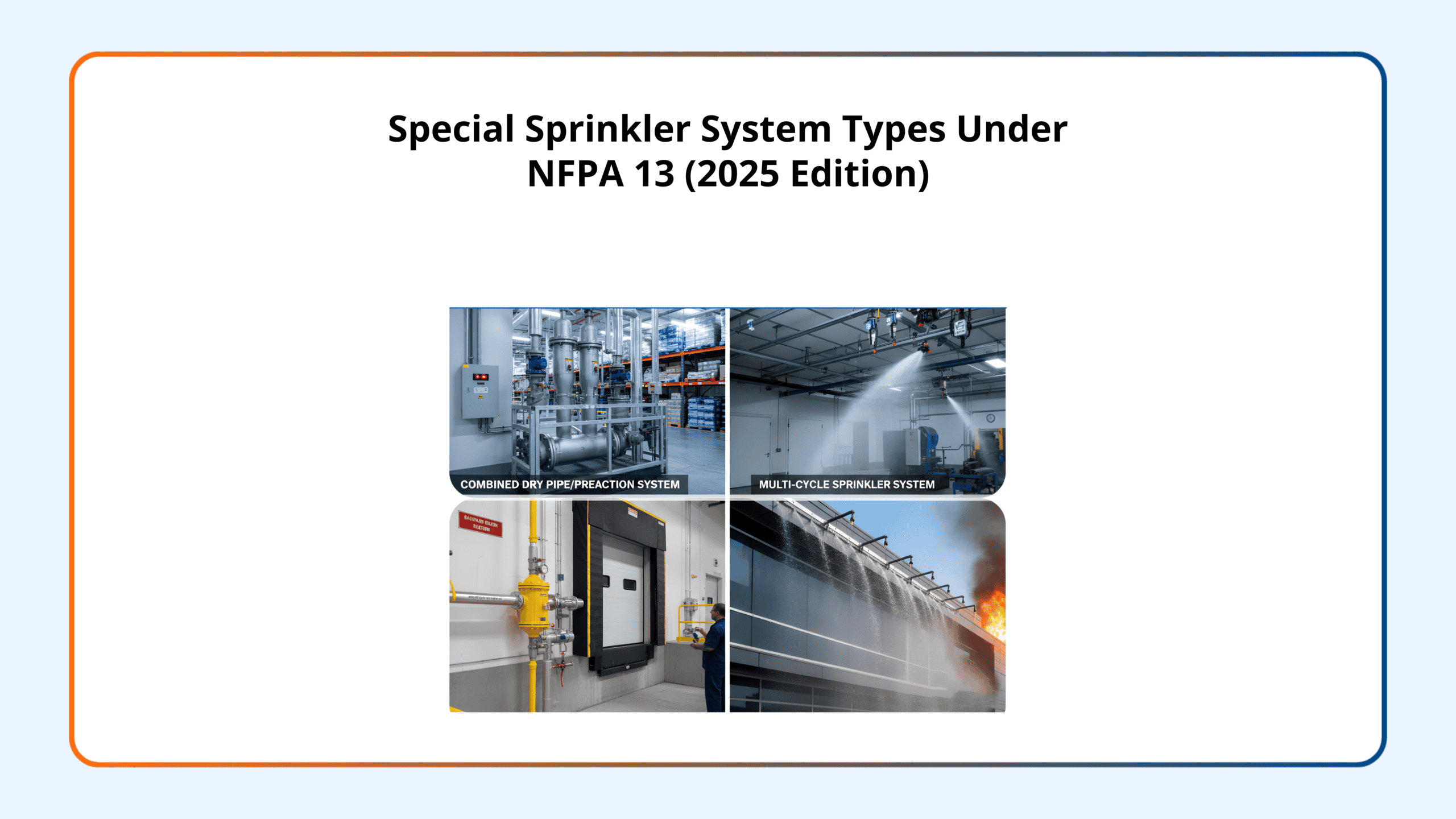
Recognising these challenges, NFPA 13 (2025) will now comprise a growing number of specialised sprinkler systems. Each has its own unique system design, installation, performance requirements and scope of use. The system types are combinations of dry pipe/preaction sprinkler systems, multi-cycle systems, antifreeze systems, exposure protection and vacuum systems and integrated detection capability. The goal is to create sprinkler systems that are more reliable, to reduce the risk of water damage and to maintain plant function in extreme circumstances.
To see the intent and application of less common system types, refer to the various types of sprinkler systems as identified in this article. It points out the limitations of the typical wet pipe fire protection systems and describes how individualised solutions can prevent damage from freezing, reduce long pipe runs, eliminate vapours from grease, protect from sub-zero temperatures and offer exposure protection from outdoor fires.
Fire safety engineers, system designers, inspectors and building managers all need to understand the various types of special hazard systems they might encounter in order to comply with the code, have reliable systems, and provide effective protection of lives from the hazards of the developing events in our fast changing world.
Special Types of Sprinkler Systems
Most people are familiar with the standard types of sprinkler systems and their specifications, namely wet pipe, dry pipe, preaction, and deluge systems. However, did you know that NFPA 13 (2025 edition) Chapter 8 has identified eight (8) additional types of sprinkler systems and their specific requirements for design and installation?
Modern Fire Protection systems often require more than just traditional Wet Pipe sprinklers. Many unique environments, such as piers, terminals, wharf areas, outdoor buildings and Aviation environments, require specialized sprinkler systems, such as Integrated Dry Pipe/Preaction, Freeze Protection (Anti-Freeze), Multi-Cycle and Exposure Protection.
Therefore, understanding these specialized systems is extremely important to the engineers, designers and operators of high-risk/unusual applications.
Specialized Commercial Cooking Equipment and Ventilation. Specialty cooking facilities present unique challenges to fire protection engineers. Traditional wet-pipe sprinkler systems are often inadequate for these types of applications and require specialties to be designed into the system to ensure reliability, minimize downtime, and meet NFPA requirements.
This TechNote provides a detailed overview of the technical requirements for less commonly used types of sprinkler systems, such as:
- Integrated Dry Pipe/Preaction Sprinkler Systems (used in piers, terminals and wharf areas)
- Multi-cycle systems
- Antifreeze systems and external sprinklers used for fire protection
- Refrigerated spaces
- Commercial cooking equipment and ventilation equipped with preaction/deluge sensing and release systems
- Vacuum systems
Combined Dry Pipe and Preaction Systems
While the utilization of combined dry pipe and preaction systems has significantly decreased in recent times, these types of systems may be required for buildings with extended pipe lengths and extreme cold temperatures, i.e., piers and wharves. Combined dry pipe/preaction systems offer a reliable means of providing a source of water that is available immediately upon activation of a fire detection system, as well as a means of providing fire protection in the event that a fire detection system fails. The National Fire Protection Association (NFPA 13) places a strong emphasis on the fact that when a fire detection system fails, the dry pipe valve will operate normally, though it may have a slightly longer response time; however, when a dry pipe valve fails, the fire detection system will continue to provide notification.
In addition, manual activation must occur within 200 feet of travel for the purpose of preloading the system in high-risk environments. Types of sprinklers permitted within this system configuration include: upright, listed dry sprinkler, pendant, sidewall, and horizontal sidewall types, as long as they are located in either heated or properly constructed areas.
In larger systems, it is common for dry pipe valves to be piped in parallel so that both valves can trip at the same time, thus maximizing the flow characteristics of the system. Maintenance of these types of sprinkler systems is simplified with cross-connection piping with indicating valves.
NFPA 13 requires time restrictions for water delivery, ensuring that water reaches the most remote sprinklers within a prescribed period—typically no more than one minute every 400 feet of feed main and a maximum of three minutes altogether.
Multicycle Sprinkler Systems
Multicycle systems use repeated on-off water flow in response to changing heat conditions, decreasing water damage while maintaining fire suppression effectiveness. These systems use closed-loop heat detectors that reset after reaching their activation point, along with timers to prevent short-cycling. Multicycle systems are available in wet pipe, deluge, single interlock preaction, and double interlock preaction configurations, all of which are fail-safe, meaning they can operate even if primary and backup power is lost. Installation and performance are subject to manufacturer-specific specifications, and systems must be listed and tested as full assemblies.
Antifreeze Systems
Antifreeze systems are specialised wet systems that protect places prone to freezing, such as loading docks or cold storage. While they were previously less expensive than dry pipe systems in limited areas, the inclusion of backflow preventers and expansion chambers has shifted their economic advantage. NFPA 13 currently requires the use of specified, noncombustible antifreeze solutions, following instances that demonstrated the ignite risk of old solutions.
Important design considerations include:
- Comply with local health and safety regulations.
- Documentation of antifreeze kind, brand, minimum usage temperature, and volume
- Proper piping systems to avoid solution backflow.
- Expansion chambers or relief valves to handle thermal expansion and avoid overpressure.
When antifreeze is used with early suppression fast-response (ESFR) sprinklers, only the following combinations of ESFR sprinklers and premixed propylene glycol solutions are allowed.
Sprinkler systems that protect against exposure
Outside sprinkler systems, also known as exposure protection systems, safeguard structures from exterior fire dangers such as neighbouring buildings, flammable storage, or industrial processes. Their twin goal is to reduce heat transfer into the structure while also preventing the igniting of combustible surfaces on the exterior. Prompt activation, ideally automatic, is crucial to preventing thermal shock-induced glass fracture or surface igniting.
Design considerations include:
- Each system has independent control valves.
- Due to environmental exposure, use corrosion-resistant pipe and fittings.
- Listed strainers to avoid clogging in sprinkler systems with low K-factors.
- Sprinkler placement to ensure best wall and window protection, taking into account architectural projections, cornices, and roof slopes
Exposure sprinklers that protect windows, for example, must be placed near the top of the window sash, with spacing determined by width and K factor. Cornices that are deeper than 12 inches require dedicated sprinklers set up to 10 feet apart. Open spray sprinklers can be utilised for roof protection, but hydraulic calculations must be performed to assure minimum discharge pressures of 7 psi, a water supply duration of at least 60 minutes, and proper application across protected surfaces.
These specialised systems necessitate close attention to hydraulics, water supply, and operational verification. Antifreeze systems, for example, necessitate test connections in remote places and for higher quantities to guarantee that solution concentration is consistent throughout. To guarantee that water is effectively distributed to walls, windows, and roofs, exposure protection systems must take into account wind effects, heat radiation, and convective movements.
Designers must additionally consider local regulatory requirements, authorities with jurisdiction approvals, and manufacturer specifications for multicycle or antifreeze systems. Correct installation, inspection, and maintenance are essential for ensuring reliability, particularly in situations with extreme temperatures, extensive piping lengths, or potential exterior fire exposure.
Refrigerated Spaces
Fire suppression systems in refrigerated environments, where temperatures consistently fall below the freezing point, demand careful planning. Conventional wet-pipe systems are vulnerable to freezing if water infiltrates the pipes, which can lead to expensive repairs and prolonged operational interruptions. Frozen piping often requires removal and thawing in a heated setting prior to reinstallation. To mitigate these risks, engineers frequently employ double interlock preaction systems or other
Air supply is also crucial in dry pipe and preaction systems. If air contains moisture, it can freeze in the pipes, creating ice plugs. These plugs then block the system, making it less effective. To reduce moisture, several methods are used. These include taking air from the coldest part of the freezer, using desiccant air dryers, and using nitrogen instead of air. Desiccant dryers come in different designs. Smaller systems use replaceable cartridges, while larger systems use regenerative assemblies that can continuously remove moisture.
System Design Requirements for Subzero Environments
When designing for spaces kept below 32°F (0°C), NFPA 13 stipulates several key features.
- Pipes entering the refrigerated area need removable sections, at least 30 inches long, to make inspections easier and minimise ice accumulation.
- Low-pressure alarms are required to notify personnel of air supply problems, unless local alarms with automatic air maintenance systems are in place.
- Regarding piping pitch, pipes should be installed at the correct angle to facilitate quick water drainage and prevent immediate freezing.
- Control and check valves should be located outside the refrigera Air or nitrogen supply lines for refrigerated systems necessitate removable supply lines equipped with appropriate valves, ensuring that only one line is active at any moment.
- Detection devices employed in preaction systems within chilled environments are generally fixed-temperature electric or pneumatic types, with activation thresholds below the temperature that triggers the sprinkler system. Rate-of-rise detectors are not permitted because of their inadequate performance in cold environments
Protecting Commercial Cooking Operations
Commercial kitchens provide unique fire concerns, especially due to grease-laden vapours. NFPA 96 and NFPA 13 specify sprinkler and automatic spray nozzle placement to ensure coverage of cooking surfaces, exhaust ducts, duct collars, and plenum chambers. Special considerations include:
- Deep-fat fryers: Standard sprinklers are inadequate for deep fat fryers because the huge water droplets might cause the fire to spread quickly. Only listed, fryer-specific sprinklers may be utilised, with placement and water supply consistent with their listing.
- Hood and Exhaust Systems: Hoods with built-in fire extinguishing systems are considered protected areas and do not interfere with overhead sprinklers. Sprinklers and nozzles must provide appropriate coverage for duct risers, offsets, and plenums, adhering to spacing rules.
- Temperature Ratings and K-Factors: Sprinklers in duct and plenum regions are rated for extra-high temperatures (325-375°F) and require K-factors ranging from 1.4 to 5.6 to ensure proper discharge.
- Fuel and Heat Shutdown: When any cooking equipment sprinkler is activated, the fuel and heat sources are automatically turned off. All devices require a manual reset to resume operation, preventing accidental re-ignition.
- Testing and maintenance access are essential for both kitchen and refrigeration systems. The listed indication valves, strainers, and test connections allow for verification of appropriate function without jeopardising system integrity.
Vacuum Systems
Vacuum fire sprinkler systems, which were included in NFPA 13’s 2025 edition, offer novel protection for settings prone to corrosion and freezing. These systems reduce water-related risks by maintaining negative pressure in the pipes and are suitable for both dry pipe and preaction setups. Installation and relief valve settings must adhere to manufacturer specifications, and all system components, including sprinklers, must be listed for vacuum conditions.
Detection and Release Systems
This part is also new in the 2025 edition of NFPA 13. Preaction and deluge systems use detection methods that are compatible. These may include pneumatic or hydraulic sensors, heat detectors, smoke detectors, or ultraviolet/infrared radiation detectors. Systems must activate prior to water release, using thermal devices rated below the sprinkler activation temperature. For pilot line detection, NFPA 13 specifies spacing, piping specifications, and corrosion resistance, assuring dependable operation even in harsh industrial or outdoor conditions.
Conclusion
Combined dry pipe and preaction systems, multicycle sprinklers, antifreeze subsystems, and exposure protection systems are alternative options for conditions that pose a challenge to traditional fire sprinkler systems. A thorough understanding of design, installation, and operational requirements ensures that these systems provide consistent performance, protect property, and save lives. As fire threats evolve and structures become more complicated, the importance of specialised sprinkler systems in protecting sensitive areas grows.
Environmental variables, system configuration, and NFPA standard compliance are all important considerations when designing fire prevention for refrigerated rooms and commercial cooking situations. Engineers must incorporate numerous tactics to preserve safety and reliability, including detachable pipe sections, desiccant dryers, specialised deep fat fryer sprinklers and vacuum systems. Emerging technology, like hoover systems and improved detection, are expanding the alternatives for effective protection, allowing facilities to reduce downtime while also protecting property and staff.