Home / Ansul Fire Suppression Foam Systems
Rotaflow offers ANSUL fire suppression foam system solutions for flammable liquid risks in industrial and high-risk settings. System design, equipment selection, installation, and ongoing maintenance are all part of our commitment to provide dependable fire protection.
Rotaflow specializes in ANSUL foam-based fire suppression systems, including installation and technical assistance for fire protection in industrial environments.
Rotaflow provides ANSUL foam fire suppression product and service throughout the western provinces of Canada.
Rotaflow has vast experience in supporting industrial fire suppression installations done in high-risk and hazardous environments.
Assistance with foam system selection, application requirements, and project-specific fire protection needs.
Rotaflow has a team of experienced professionals to support complex fire suppression and industrial foam system projects.
Fast response with technical advice on ANSUL products, and partner for the project lifespan.
Rotaflow provides ANSUL foam fire suppression system design, installation, inspection, and maintenance services for reliable industrial fire protection.
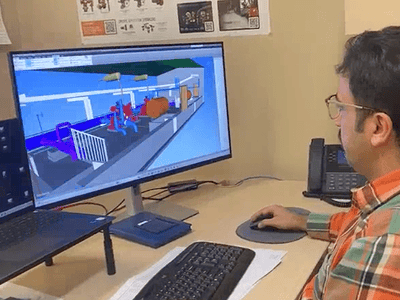
Rotaflow engineers design ANSUL foam fire suppression systems to fulfill user’s needs, satisfy code compliance, and to provide reliable fire protection performance.
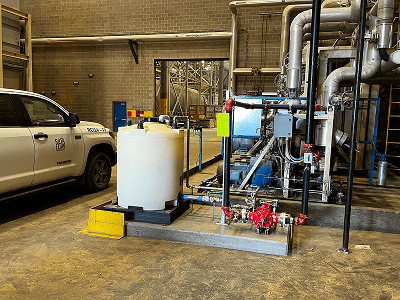
Rotaflow Technicians install and commission ANSUL foam suppression equipment to ensure proper functioning of the system and provide long-term, reliable system performance.
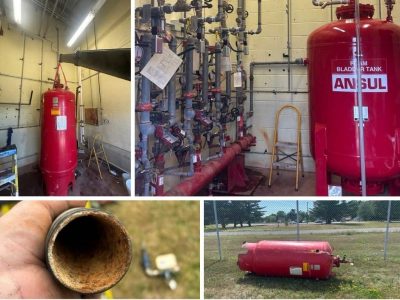
Rotaflow offers technical support and other services for industrial foam fire suppression system applications. ANSUL will inspect, test, maintain and repair their foam fire suppression systems to keep them meeting regulatory compliance and operating properly at all times.
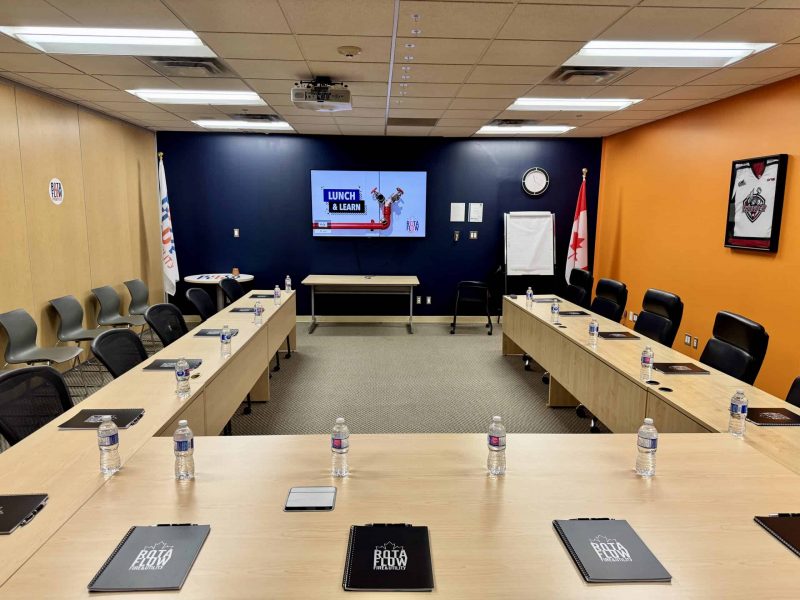
Book a Lunch & Learn with Rotaflow to witness ANSUL foam fire suppression systems in action and discuss both project requirements and installation with fire protection experts.
NFPA 11 requires the foam concentrate to be listed, and particularly listed for use on the particular flammable or combustible liquid being covered, so concentrate selection is not interchangeable across hazard kinds. A concentration designated for hydrocarbon fuel protection is not suited for a polar solvent danger unless it has that specific listing.
The annexe to NFPA 11 states that foam concentrates can freeze and can be damaged by prolonged storage at elevated temperatures. For this reason, the storage temperature should be controlled to prevent exceeding any temperature constraints indicated. This is a realistic maintenance problem for any facility that keeps bulk concentrate on site—a foam system skid or bulk storage tank located in an uninsulated or exposed area might diminish the concentrate’s effectiveness long before it is ever called on to discharge.
NFPA 11 requires the suction inlet for atmospheric concentrate storage tanks to be located at least 25.4 mm (1 inch) above the bottom of the tank to avoid suction of any sediment or contamination that may settle to the bottom of the tank that could affect proportioning accuracy or clog system components.
NFPA 11 mandates that proportioning systems be equipped with signage advising the proper shutdown process to prevent the unintended loss of foam concentrate or damage to the system during shutdown. Stopping foam proportioning systems out of sequence can waste concentrate or damage equipment. That is why the standard considers the correct shutdown method a documented, code-required action, not something left to operator discretion.
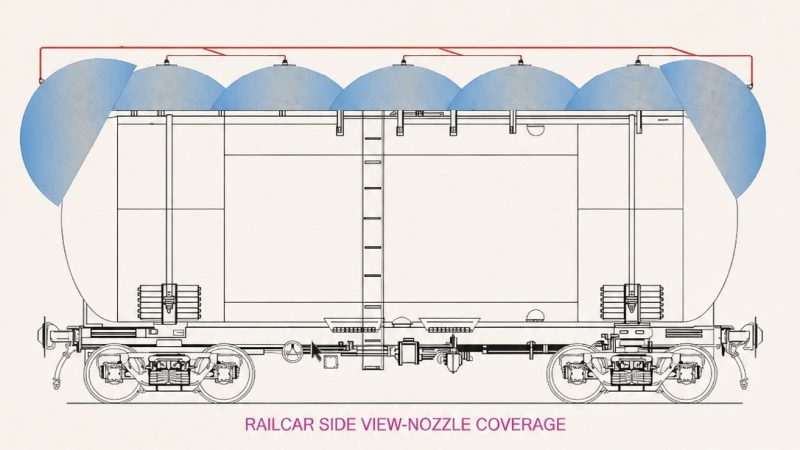
The design advice of NFPA 11 requires minimum clearance dimensions between the foam chamber deflector and the uppermost position of the floating roof, since the floating roof has a range of travel, and the deflector must not block or be struck by the roof in its highest position. That’s a detail that has to be checked against the specific tank’s roof travel range during design, not some generic spacing norm.
A Foam System skid is a specialized firefighting equipment used to suppress flammable liquid fires, particularly those involving hydrocarbons such as oil or gasoline. It
consists of a skid-mounted unit that includes a foam concentrate storage tank, proportioning equipment,
A Foam System skid is a specialized firefighting equipment used to suppress flammable liquid fires, particularly those involving hydrocarbons such as oil or gasoline. It consists of a skid-mounted unit that includes a foam concentrate storage tank, proportioning equipment, and a distribution system. When activated, the foam system generates and delivers foam to the fire, creating a blanket that suppresses the fire by smothering it and preventing the release of flammable vapors. Foam System skids are vital tools in industrial and petrochemical facilities to ensure effective fire protection.
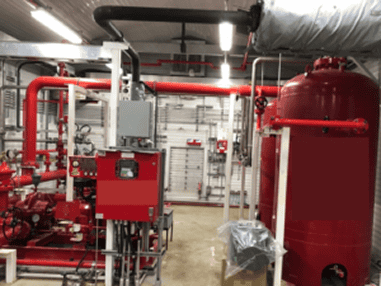
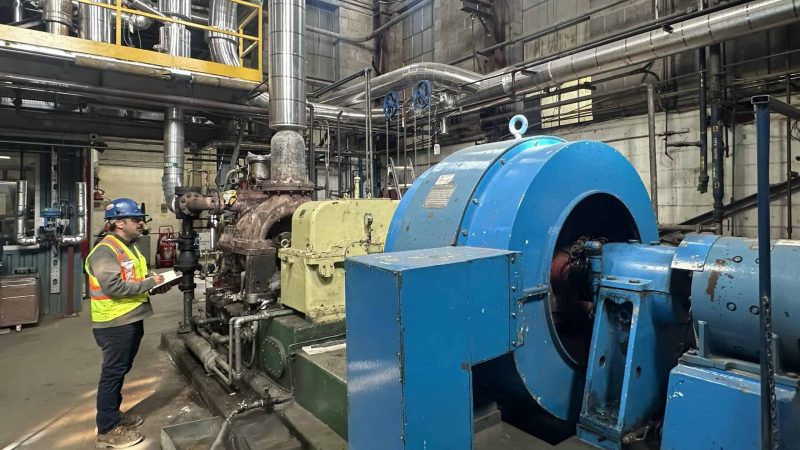
This turnkey project was given to Rotaflow in 2019 to modernize the foam suppression system at one of the Suncor operations in Northern Alberta.
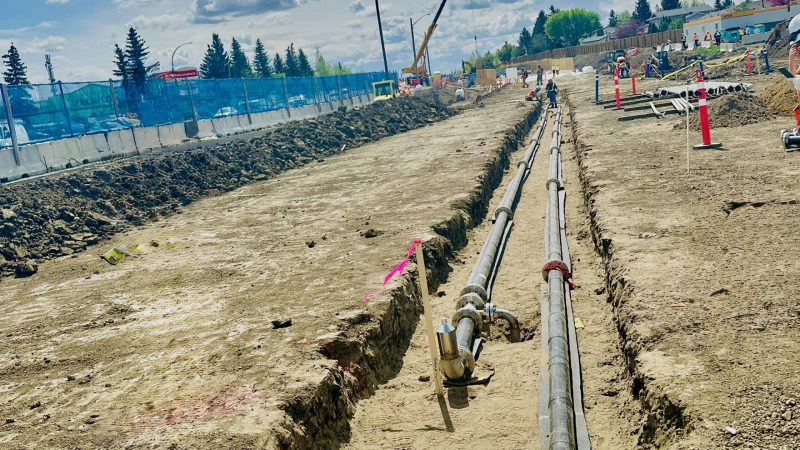
The scope of work involved updating the logic of the fire alarm system, replacing the foam proportioner and fire water system isolation valves, and replacing two foam concentration pumps, controllers, motors, valves, instruments, and electrical cables. It also included modifying the pump pads and rerouting the piping.
The end-to-end solution offered by Rotaflow comprised regulatory compliance evaluation, scoping study, thorough engineering design, creation of the building Work Package, material procurement, system building, and commissioning.
By using a multidisciplinary approach, Rotaflow had successfully finished this turn-key project and had turned over Suncor Energy Inc. with care, custody, and control of this system in early 2020.
A catastrophic catastrophe like fire might happen at any time. Engineers have developed a variety of fire suppression technologies specifically to address this issue. Since no two fires are the same, various types of fire suppression systems were developed. Some fires may result from oil spills, while others may start in the kitchen when oil is being used to cook. Water doesn’t always put out fires; in some circumstances, it could even make things worse. Additionally, using water to put out a fire in a data room will only fully destroy the electrical equipment. You can read more about this in this article.
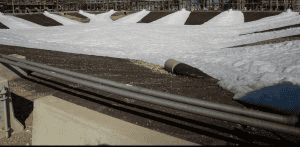
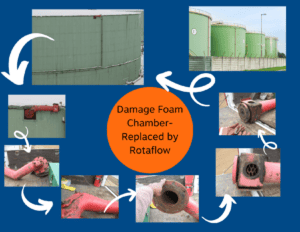
To maintain efficient fire suppression, a broken foam chamber must be replaced right away. In order to maintain the dependability of fire suppression systems, the faulty unit must be replaced right away with a new one. This will provide continuing safety and protection against potential fire threats. Watch Youtube Video about this.
Modern fire safety infrastructure must include a “Fire Detection and Alarm System” in order to quickly identify and notify inhabitants of the presence of a fire. Modern sensors, detectors, and alarms are used in this integrated system to offer early detection of smoke, heat, or flames, enabling rapid emergency personnel response and timely evacuation. With the use of cutting-edge technology, the system can precisely identify the fire’s origin, enabling targeted action. The risk of injury, loss of life, and property damage is reduced thanks to the seamless integration of fire detection and alarms, which guarantees that any potential fire hazard is discovered in its earliest stages. The Fire Detection and Alarm System is essential for maintaining a pro-active environment in any setting, including residential, commercial, and industrial ones. Learn more about Autocall Fire Alarm Systems.
Modular Deluge Skid Packages are a flexible and effective fire prevention solution, especially in high-risk industrial settings. These packages are made up of pre-engineered and pre-assembled systems that combine piping, discharge nozzles, deluge valves, and water supply control into a small, modular form. This ground-breaking method enables simple installation, decreased downtime, and streamlined maintenance. When activated by fire detection systems, Modular Deluge Skid Packages are especially made to instantly unleash a vast volume of water, effectively smothering and cooling fires in places like chemical processing factories, power production facilities, and fuel storage depots. These kits play a significant role in guaranteeing quick and effective response to fire situations, safeguarding both workers and property, thanks to their flexibility to adapt to different circumstances and streamlined functionality. Rotaflow Fire Protection with Deluge Systems Solution.

From scoping and detailed design to construction and maintenance, if you’ve got questions or ideas you would like to share, send a message.