Industrial Truck Shop Expansion (live Facility)
Project Overview:
| Location | Oil Sands Site (approx. 75 km north of Fort McMurray) |
| Project Type | Industrial truck shop expansion (live facility) |
| Facility Type | Industrial truck shop expansion (live facility) |
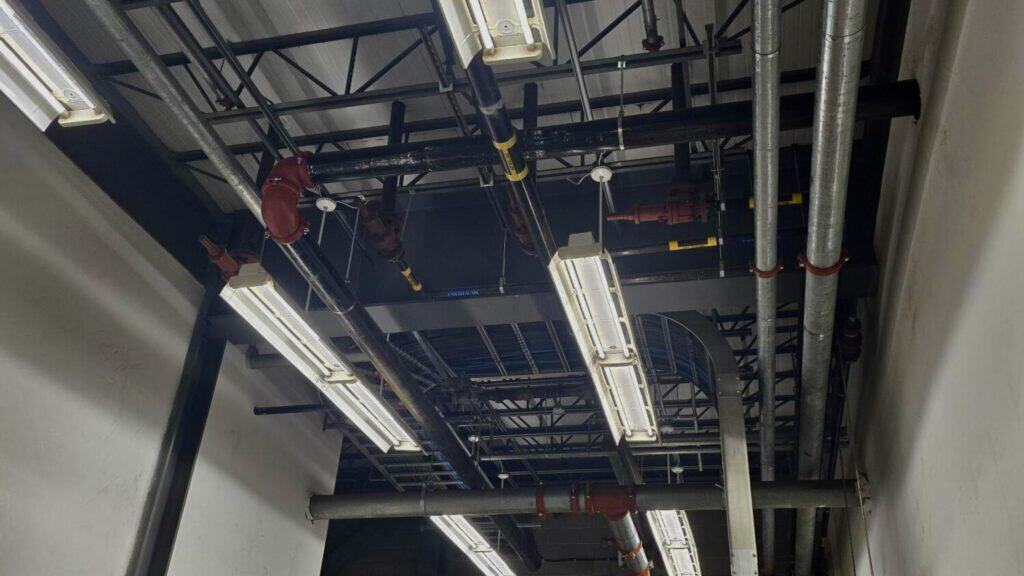
| Scope of Work | Fire protection systems (sprinklers, Wall hydrants, standpipes)
Natural Gas mechanical systems Compressed air systems Bulk lube and glycol distribution systems Tie-ins to existing live infrastructure |
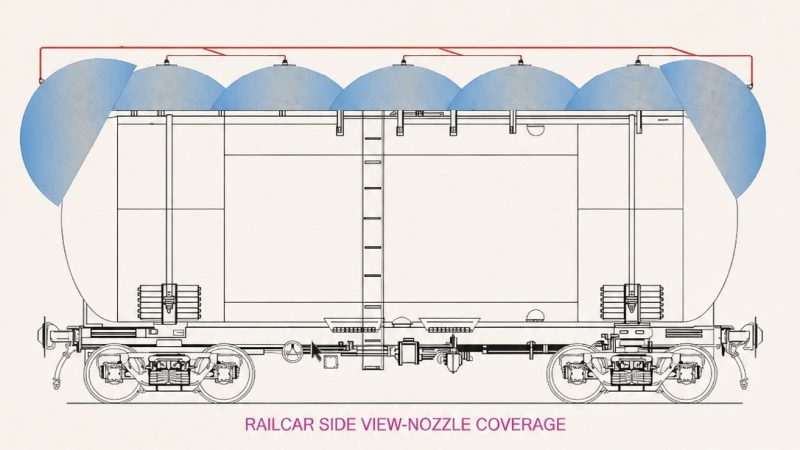
| Technologies Used | Deluge fire suppression system with fire alarm integration |
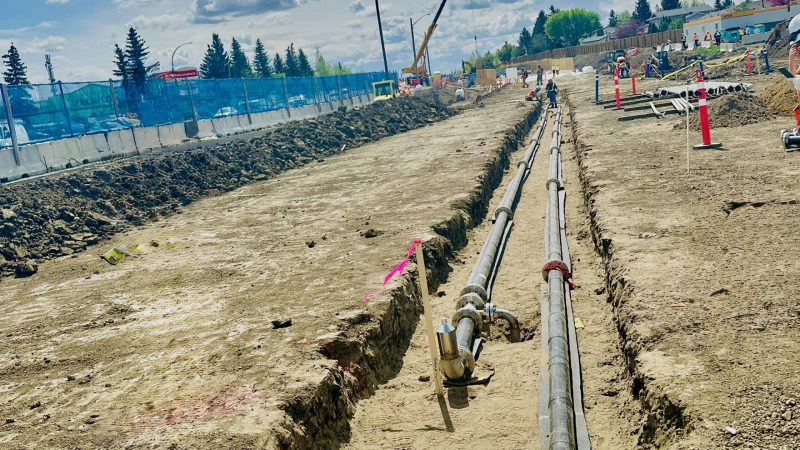
| Project Environment | Victaulic grooved piping systems
Hydraulic calculations & engineered fire protection layouts Closed-loop flushing and contamination-controlled systems Live tie-ins with coordinated shutdowns |
The Challenge
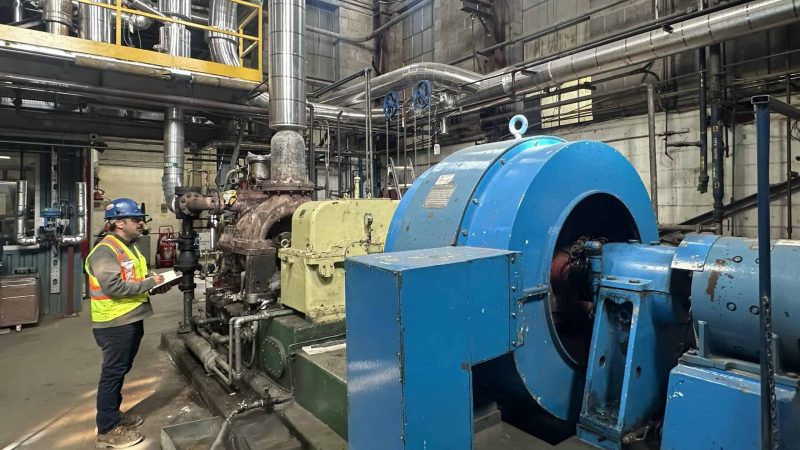
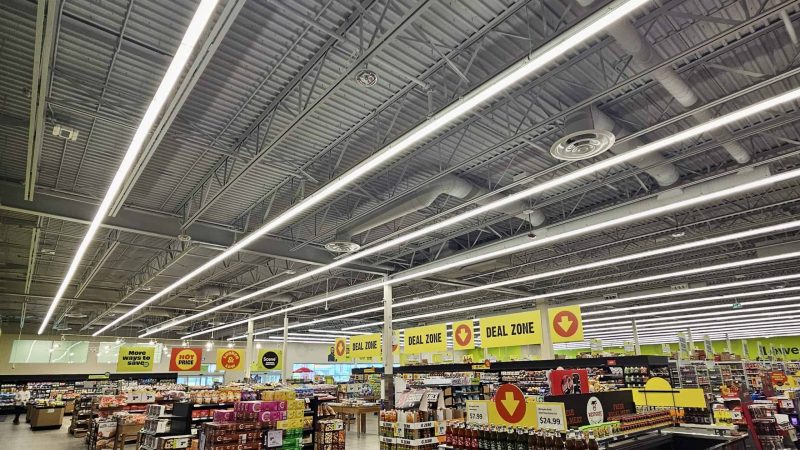
Executing construction within an active truck shop created significant constraints. The team had to safely integrate new systems while the facility remained fully operational, requiring tight coordination with site operations. High elevation work around active overhead cranes added complexity, demanding precise planning, strict safety controls, and continuous communication to avoid disruption and ensure worker safety.
Rotaflow’s Solution
Rotaflow implemented a highly structured execution strategy focused on:
- Detailed work planning and phased construction sequencing
- Daily coordination with CNRL operations and stakeholders
- Strict safety management systems and hazard mitigation
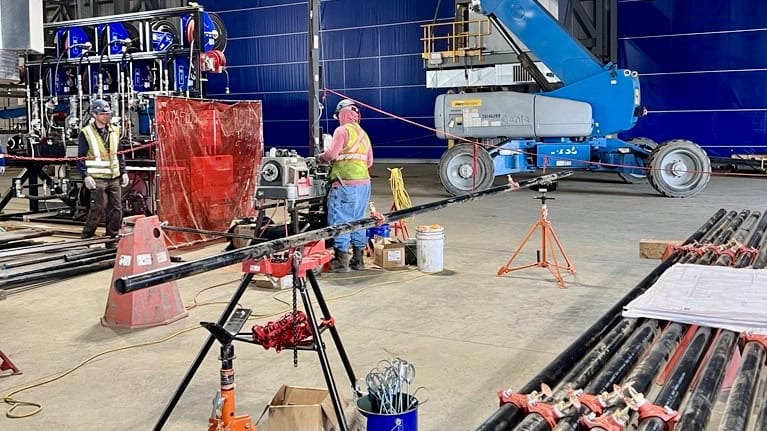
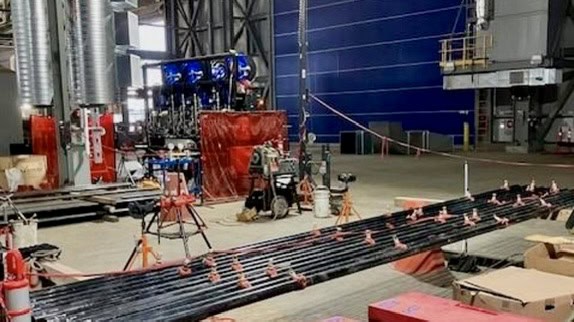
- Prefabrication and efficient installation methods to reduce on-site exposure
- Proactive issue tracking and real-time problem resolution
Implementation
The project was executed under a comprehensive management plan designed to ensure safe, efficient, and high-quality delivery within a live operating facility. Rotaflow established a structured project organization with clear roles, daily coordination meetings, and ongoing communication with the client to align construction activities with operations. The scope included full mechanical system installation—fire protection, compressed air, and bulk fluid systems—with engineered designs, staged tie-ins, and strict adherence to codes and specifications. Safety, environmental compliance, and quality control were prioritized through formal programs, inspections, and reporting systems. Work was carefully planned and sequenced to mitigate risk, manage resources, and maintain schedule and budget performance, with continuous tracking, issue resolution, and collaboration between field teams, subcontractors, and client representatives to achieve successful project completion.
Results
- Successful addition of four new service bays
- Seamless integration with existing live facility operations
- Zero major disruptions to truck shop productivity
- High-quality system installations meeting all regulatory and client standards
- Safe execution in a high-risk, high-traffic industrial environment